Pasta Primavera with Snap Peas and Parmesan
Serves 4 | About 35 minutes
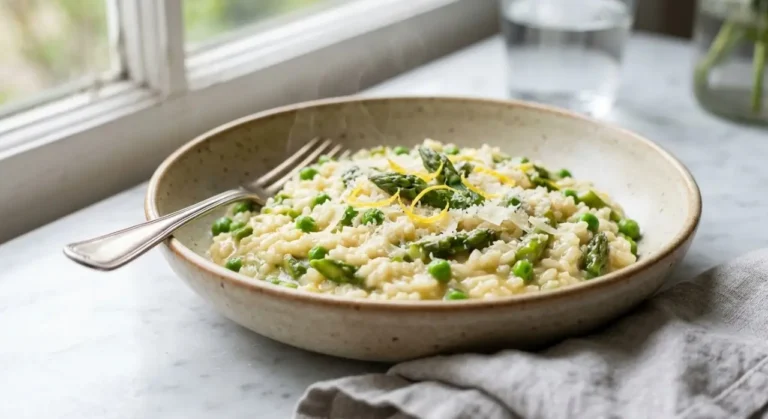
I make this Pasta Primavera with Snap Peas and Parmesan probably a dozen times between April and June, then barely touch it the rest of the year. There’s something about snap peas in spring that makes me want to cook as little as possible and just let them do the work. This version has snap peas, asparagus, cherry tomatoes, zucchini, lemon, and a stupid amount of Parmesan. It’s one pan plus the pasta pot. It takes 35 minutes on a slow night, less if you’ve made it before.
The focus keyword people keep asking about is pasta primavera, and yes, this is that. Classic spring pasta with real vegetables. Nothing from a jar.
What makes it worth making
- Genuinely fast. Not “fast” the way some recipes lie about being fast. Actually done in 35 minutes
- The vegetables stay crisp because you add them in the right order
- No cream sauce. The Parmesan and pasta water do the job
- Works with pretty much whatever spring vegetables you bought and then forgot about
What you need
The pasta
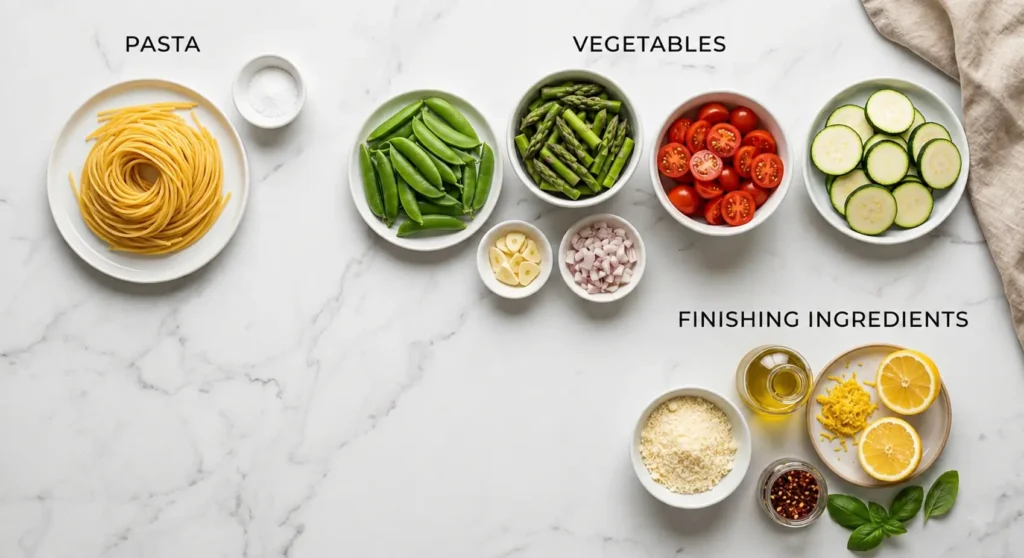
- 400g spaghetti or linguine (penne works too, I just like long pasta here)
- Kosher salt
The vegetables
- 200g snap peas, strings pulled off
- 1 bunch asparagus, maybe 300g, trimmed and cut into 2-inch pieces
- 250g cherry tomatoes, halved
- 1 zucchini, sliced into half-moons
- 4 garlic cloves, sliced thin
- 1 shallot, diced
Everything else
- 4 tbsp good olive oil
- 80g Parmesan, freshly grated, plus more for the table
- 1 lemon, zest and juice
- Red pepper flakes if you want heat
- Salt, pepper, fresh basil or parsley
A note on the Parmesan: buy a block and grate it yourself. Pre-shredded has anti-caking powder in it and won’t melt right. It’ll just sit there in little clumps. Takes 90 seconds to grate what you need.
How to make it
Salt the water like you mean it. Big pot, boiling water, a full tablespoon of kosher salt. It should taste seasoned. This is the step most people skip and then wonder why the pasta tastes like nothing.
Cook the pasta short. Two minutes less than the package says. It finishes cooking in the pan. Before you drain it, get a cup of pasta water out and set it aside somewhere you won’t accidentally dump it.
While the pasta cooks, do the vegetables. Heat 3 tablespoons of olive oil in a wide skillet over medium. Shallot in first, 2 minutes. Garlic and pepper flakes, 1 more minute. Don’t let the garlic brown. Burnt garlic is acrid and it’ll follow you through the whole dish.
Asparagus and zucchini go in together. About 4 minutes, stirring here and there. They should soften but still have some resistance when you bite them. Then snap peas and cherry tomatoes, 2 minutes. That’s it. The tomatoes will start to collapse a little and release juice. The peas stay bright green. Pull it there.
Add the pasta to the pan, not the other way around. Pour in a splash of pasta water, maybe a quarter cup. Toss everything together on medium heat for 2 minutes. Watch it come together into something that actually looks like a sauce. If it looks dry, add more pasta water. A little at a time.
Off the heat, then the cheese and lemon. This order matters. Take the pan off the burner first, then add the lemon zest, lemon juice, the last tablespoon of olive oil, and all the Parmesan. Toss it. The heat that’s still in the pan melts the cheese without it seizing up. Taste it. Add salt if it needs it, more lemon if it tastes flat.
Eat it now. It doesn’t wait.
Honest notes on the recipe
The lemon is not optional. I tried making this without it once when I didn’t have one, and the whole dish just tasted heavy and a bit greasy. The acid lifts everything. Use the juice and the zest.
If you want protein in here, white beans work well. Stir in a drained can right before the pasta water step. Grilled shrimp on top is good too. A halved soft-boiled egg if you want something more relaxed.
Ricotta is a good move if you want the sauce richer. Two tablespoons stirred in at the end with the Parmesan. Makes it a bit more substantial without tipping it into cream pasta territory.
Serving
On its own with bread to mop the bowl. A simple green salad if you want something alongside. A cold white wine if it’s that kind of evening. Nothing fancy required.
Storage
Three days in the fridge. Reheat in a pan with a splash of water. The vegetables will be softer the next day but it still eats fine for lunch.
Don’t freeze it. The snap peas turn to mush and the whole point of the dish disappears.
Nutrition (per serving, roughly)
Around 520 calories. 19g protein, 72g carbs, 18g fat, 6g fiber. This changes depending on how heavy-handed you are with the Parmesan, which for most people means it’s higher.
If you make it
I’d be curious what vegetables you used. People who make this a second time usually start riffing, green beans instead of asparagus, corn in summer, thinly sliced fennel if you have it. Leave a comment if something worked.
Questions people ask
Can I use frozen vegetables? Frozen peas, yes, throw them in at the end straight from the bag. Frozen asparagus goes mushy and isn’t worth it here.
Can I make it ahead? Prep everything ahead. Cook it right before eating. The assembled pasta absorbs all its sauce within an hour and the vegetables keep going soft.
My pasta primavera always tastes bland. Why? Undersalted water, or not enough lemon, or both. Salt the water properly, finish with a real squeeze of juice not just zest, taste it before you plate it.
Best pasta shape for this? Long pasta catches the vegetables and wraps around them. Spaghetti or linguine. Penne if you want something more substantial. Skip small shapes like orzo, they sink to the bottom and you end up with a vegetable dish with pasta hidden underneath.
Can I make this without Parmesan? Pecorino Romano is the closest swap, a bit saltier. Nutritional yeast for a dairy-free version, maybe 3 tablespoons, plus extra lemon. Not the same but still good.
Why did my vegetables get soggy? Everything went in at once. Asparagus and zucchini need 4 minutes. Snap peas and tomatoes need 2. Add them in stages and you get texture. Add them all together and you get soup.
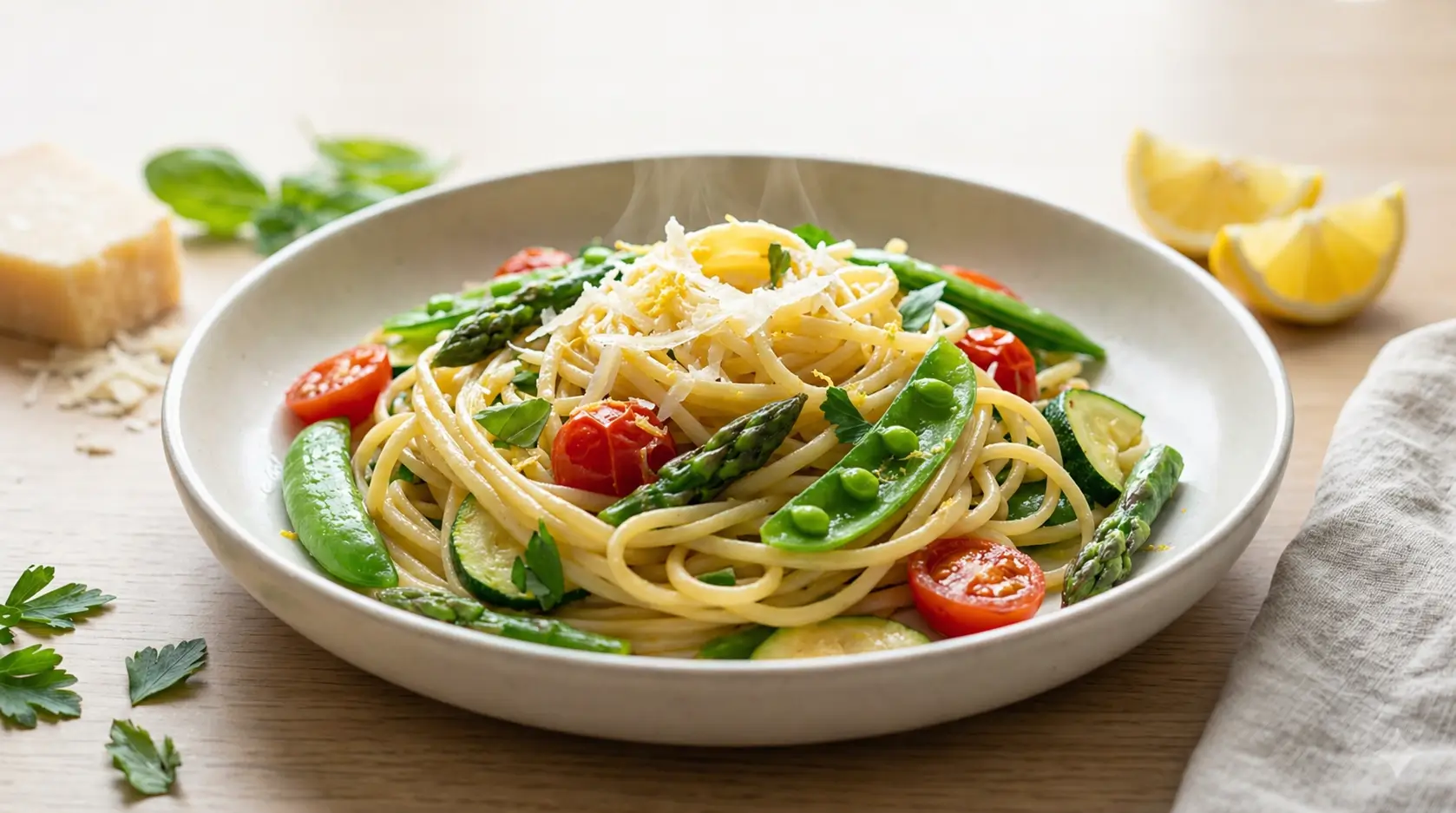
Pasta Primavera with Snap Peas and Parmesan
Ingredients
Equipment
Method
- Cook pasta in salted boiling water according to package instructions. Drain and set aside.
- Heat olive oil in a large skillet and sauté garlic until fragrant.
- Add asparagus, snap peas, carrots, and peas. Cook until tender-crisp.
- Toss cooked pasta into the skillet with vegetables.
- Add lemon juice, salt, pepper, and Parmesan cheese. Mix well until evenly coated.
- Serve warm, topped with extra Parmesan if desired.