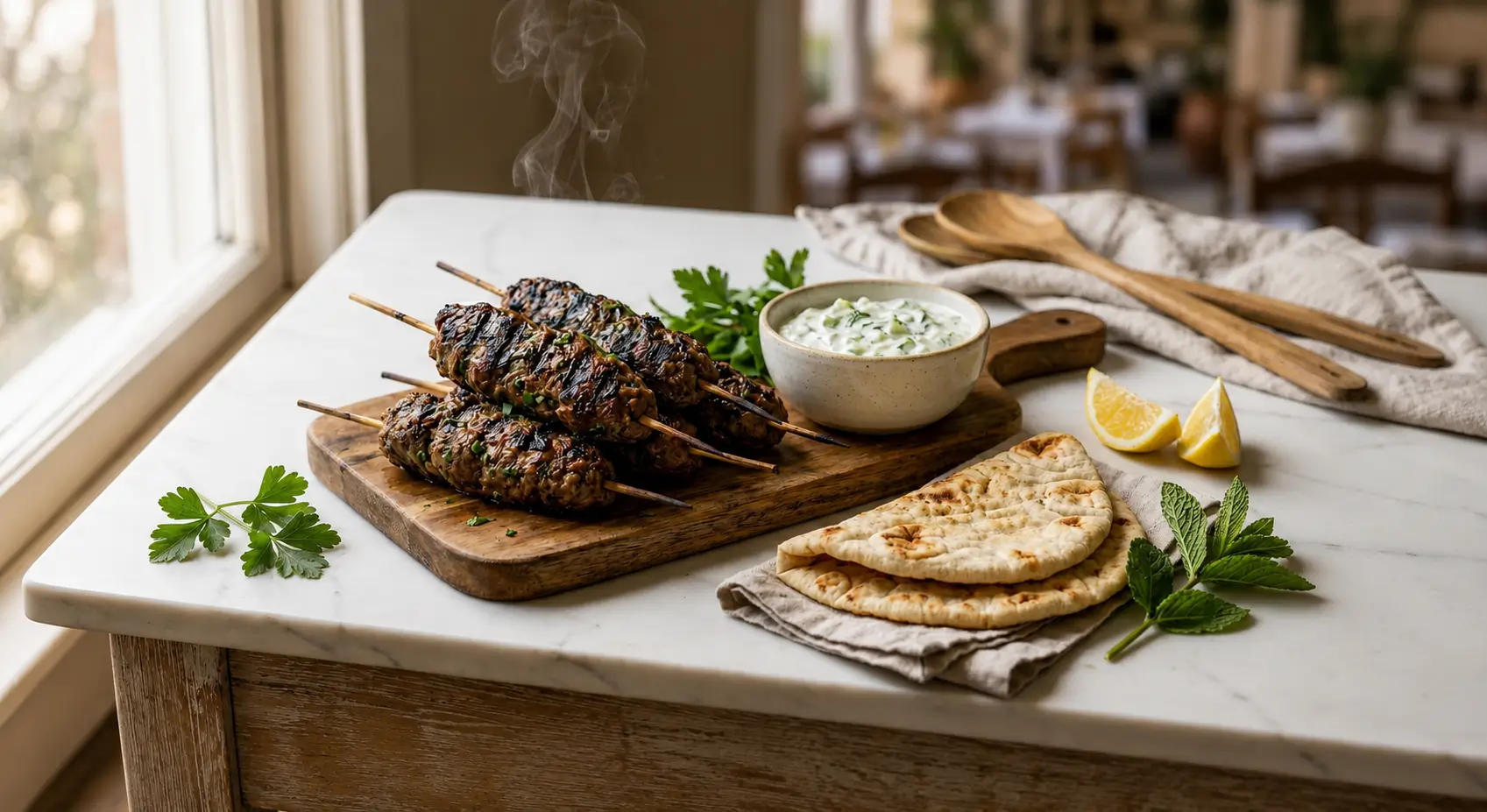
Easy Lamb Kofta with Tzatziki and Flatbread Recipe
Serves 4 · About 40 minutes
I make lamb kofta with tzatziki and flatbread on nights when I want to feel like I cooked without actually spending the whole evening in the kitchen. It’s become one of my defaults — not because it looks impressive (though it does), but because it’s genuinely quick and there’s never any food left on the plate.
What keeps me coming back to lamb kofta with tzatziki and flatbread is how little thinking it requires once you’ve done it once. Mix the koftas, park them in the fridge while you make the tzatziki, get the pan properly hot, cook them. That’s the whole thing. I made this for two people last Tuesday and used the same recipe for eight people the weekend before that.
One thing I’ll say upfront: getting the pan hot enough is the only part that actually matters. Everything else has room for error.
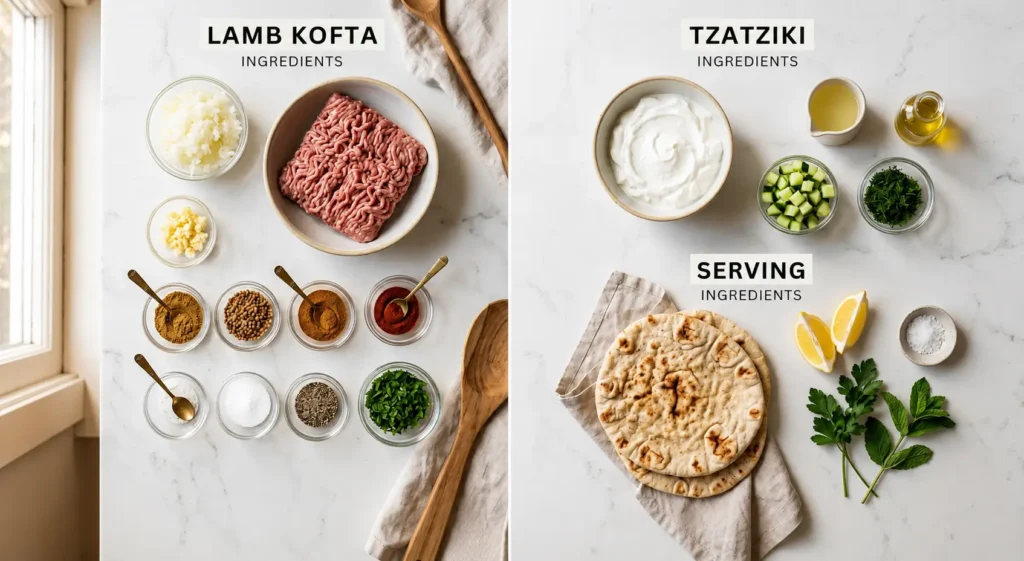
Ingredients for lamb kofta with tzatziki and flatbread
Before you shop, check whether you have smoked paprika. People often have sweet but not smoked, and they’re not the same thing in this recipe.
Koftas — serves 4
- 500g lamb mince, 15–20% fat
- 1 medium onion, finely grated
- 3 garlic cloves, minced
- 1 tsp ground cumin
- 1 tsp ground coriander
- 1/2 tsp cinnamon
- 1 tsp smoked paprika
- 1/2 tsp salt and 1/2 tsp black pepper
- Small handful of flat-leaf parsley, finely chopped
- Olive oil for the pan
Tzatziki
- 250g full-fat Greek yogurt
- 1/2 medium cucumber
- 2 garlic cloves, minced
- 1 tbsp lemon juice
- 1 tbsp olive oil
- 1 tbsp fresh dill or mint, chopped
- Salt and pepper
To serve
- 4 flatbreads — shop-bought is fine
- Lemon wedges
- Extra herbs if you want
What to look for when buying lamb: Go for mince that’s pink to deep red and 15–20% fat. Anything grey or sitting in pooled liquid in the packet is past it. Skip pre-seasoned mince entirely — you’re adding your own spicing. If you can only find lean mince (under 10% fat), stir a tablespoon of olive oil into the mix before shaping. Lean koftas are where most people get disappointed with lamb kofta with tzatziki and flatbread. It’s almost always a fat problem, not a technique problem.
How to make lamb kofta with tzatziki and flatbread
Start with the tzatziki. Not because it’s hard — it takes maybe 7 minutes — but because it gets better the longer it sits in the fridge. Make it first and it’ll be ready by the time the koftas are done.
Step 1 — Drain the cucumber properly
Grate half a cucumber on the coarse side of a box grater. Tip it into a clean tea towel and squeeze. Actually squeeze — not a polite ten-second press, but a sustained, deliberate wringing until you’ve forced out as much water as you can. I squeeze mine for a solid 30 seconds. Wet cucumber is why so many homemade tzatzikis come out thin and watery.
Step 2 — Make the tzatziki
Combine the squeezed cucumber with the yogurt, garlic, lemon juice, olive oil, and chopped dill or mint. Salt and pepper to taste. Stir it, taste it, adjust the lemon. Cover and put it in the fridge. You’re done with tzatziki.
Step 3 — Mix the koftas
Lamb, grated onion, garlic, all the spices, into a bowl. Use your hands and work it together for about a minute. You want the mix to look uniform — no clumps of spice, no dry patches of mince. Stop at a minute. If you overwork it, the koftas come out with a dense, paste-like texture.
Step 4 — Shape and chill
Divide into 8 to 10 portions and roll each into a sausage shape about 10cm long. Even thickness matters here — uneven koftas don’t cook evenly. Skewers are optional; unnecessary in a pan. Once shaped, put them on a plate, cover loosely, and refrigerate for 20 minutes. Do not skip this step. Cold koftas cook without falling apart — this is why lamb kofta with tzatziki and flatbread recipes always call for a rest in the fridge. A kofta that goes into a hot pan at room temperature will crack when you try to turn it.
Step 5 — Get the pan hot
Cast iron or a heavy grill pan. Medium-high heat, give it a couple of minutes, then brush with olive oil. Wait until the oil shimmers before anything goes in. If you’re looking at a still, quiet pan, it’s not ready. This is the one step I’d say not to rush.
Step 6 — Cook without fussing
Place the koftas in and leave them. Don’t touch them, don’t poke them, don’t move them around. After 3 to 4 minutes, a proper crust will have formed and each one will release from the pan on its own. Turn them and cook the other side for another 3 to 4 minutes. If you cut one open, there should be no pink at the center.
Step 7 — Warm the flatbreads and serve
Dry pan over medium heat, 30 to 45 seconds a side. They should blister and stay soft and pliable. Don’t microwave them — they go rubbery. Put everything on the table: flatbreads, koftas, tzatziki, lemon. Done.
On heat: A pan that’s too cool will steam your koftas grey. You want to hear a proper sizzle the moment they touch the surface — not a quiet hiss, an actual sizzle. That sound is the difference between a kofta with a crust and one without.
Total time: roughly 40 to 50 minutes with the fridge rest included. Cast iron runs hot; a thin non-stick runs cooler. Color tells you more than the clock does.
What makes lamb kofta with tzatziki and flatbread actually work
There are a few things in this recipe where the difference between doing them properly and half-doing them shows up clearly in the finished dish.
The fat in the lamb. Lean mince dries out fast over high heat. 15–20% fat gives you a kofta that stays moist inside even with a properly seared exterior. I’ve made lamb kofta with tzatziki and flatbread with lean mince by mistake and the result was edible but noticeably worse — dryer, less flavorful. If you’re unsure what you’ve bought, add a tablespoon of olive oil to the mix.
Grating the onion instead of chopping it. Chopped onion leaves pieces that sit inside the kofta like structural gaps. They fall out during cooking, and the kofta can open up at those points when you try to turn it. Grated onion disappears entirely into the mix and contributes moisture from within. Use the fine side of the grater and do it over the bowl so you keep the juice.
Seasoning bolder than feels right. The inside of a kofta never touches the pan. It’s cooked only by heat conducted through the outer layer of meat, which means the seasoning needs to work from within — and it needs more of it than you’d think. Raw kofta mix that tastes slightly too salty will taste right once cooked. Mix that tastes right raw will taste flat on the plate.
Actually leaving them alone in the pan. Most people get nervous and start moving koftas before the crust has formed. That’s what breaks them. Once they’ve had undisturbed contact with a hot surface for 3 to 4 minutes, they turn on their own. If a kofta is sticking when you try to move it, it just needs more time.
Resting the tzatziki. Making lamb kofta with tzatziki and flatbread and serving the sauce immediately is fine. But tzatziki that’s had 30 minutes in the fridge is noticeably thicker and more settled. If you’re cooking for more than four people, make the tzatziki a couple of hours ahead.
“I’d been grating the onion on the coarse side and wondering why bits kept falling out of the koftas in the pan. Switched to the fine side and the problem went away completely.”
Ways to vary lamb kofta with tzatziki and flatbread
With harissa — Stir 1 tablespoon of harissa into the kofta mix and reduce the smoked paprika to half a teaspoon. More heat, and a different kind of depth. A plain cucumber and red onion salad works well alongside.
With pine nuts — Add 2 tablespoons of toasted pine nuts and a pinch of ground allspice. You get occasional crunch and a faint sweetness that cuts through the richness of the lamb. Works with bulgur wheat on the side.
Herb-forward — Double the parsley, add a fistful of fresh mint into the mix, leave out the cinnamon. This is the version of lamb kofta with tzatziki and flatbread I make in summer — lighter and brighter. A tomato salad with shallots and red wine vinegar alongside.
Feta stuffed — Press a small cube of firm feta into the center of each kofta and seal the meat around it before cooking. It softens into a small creamy pocket inside. Skip the tzatziki for this one and serve with a roasted red pepper dip instead.
With beef — Half lamb, half beef mince. The flavor is milder, which makes it easier for people who don’t usually like lamb. Add half a teaspoon of extra cumin. Everything else about the recipe stays the same.
If you’re trying any of these for the first time, cook one kofta as a test before shaping the rest. Adjust seasoning, then commit to the full batch.
How to store and reheat lamb kofta with tzatziki and flatbread
Cool the koftas completely before storing. Keep them in an airtight container separate from the tzatziki.
Fridge: Koftas last 3 days. Tzatziki keeps for 2 days, sometimes 3, though the cucumber keeps releasing water as it sits — just stir and drain before serving.
Freezer: Koftas freeze well for up to 3 months. Lay them on a flat tray first so they don’t freeze stuck together, then transfer to a bag. Don’t freeze tzatziki — the texture separates and doesn’t come back together properly. Make a fresh batch.
Reheating — oven: 180°C (350°F) for 10 to 12 minutes on a baking tray. This is the better method. They come back close to freshly cooked.
Reheating — microwave: Use 70% power in 30-second intervals. Two or three rounds is usually enough. Full power at once dries them out fast.
Three leftover ideas worth knowing if you have extra lamb kofta with tzatziki and flatbread: chop them up and stir through rice with fresh tomato and lemon juice; slice thin and roll into a wrap with tzatziki and pickled onion; or crumble into a tomato sauce simmered for 10 minutes and serve over pasta with feta crumbled on top. That pasta thing sounds like a stretch but it genuinely works.
Questions people ask about lamb kofta with tzatziki and flatbread
Can I make lamb kofta with tzatziki and flatbread ahead of time? Shape the koftas the day before and keep them in the fridge — up to 24 hours is fine. Make the tzatziki ahead too. Cook the koftas fresh when you’re ready.
Do I need skewers? Not for cooking in a pan. Skewers make it easier to turn koftas on a barbecue, but freehand ones cook perfectly well in cast iron or a grill pan.
What if I can’t find lamb mince? Beef works. It’s a blander result but the method is identical. Add an extra half teaspoon of cumin to the mix to compensate.
What’s the most common mistake people make with this dish? Pan not hot enough. A cool or medium pan steams the koftas instead of searing them and you get a grey, soft exterior with no crust. You need high heat before they go in.
Can I serve lamb kofta with tzatziki and flatbread to guests? It works well for groups. Double or triple the batch, warm a pile of flatbreads, put everything on the table and let people serve themselves. It looks more deliberate than it is and the lamb kofta with tzatziki and flatbread format is easy to eat informally.
Pitta or flatbread — does it matter for lamb kofta with tzatziki and flatbread? Either works. Pitta is slightly sturdier. Thick naan overpowers everything. Whatever you pick, warm it in a dry pan rather than the oven.
How do I know when the koftas are properly cooked? Cut one at the thickest point — no pink. Or use a meat thermometer: 70°C (160°F) at the center. If you’re cooking from cold for 3 to 4 minutes a side on proper heat, they’ll be there.
Lamb kofta with tzatziki and flatbread rewards basic cooking more than anything clever. If someone asks you for a good lamb kofta with tzatziki and flatbread recipe, this is the one I’d point them to. Hot pan, cold koftas going in, enough patience to leave them alone while the crust forms. Once you’ve made this recipe two or three times you won’t need to look at it again — it just becomes a thing you make.