How to Make Spring Pea and Asparagus Risotto (The Right Way)
The Dish I Actually Make in April (Spring Pea and Asparagus Risotto)
Asparagus shows up at a decent price once a year. For me that’s April, sometimes early May, and it doesn’t last long. The moment I see thin green spears that aren’t limp or split at the ends, I buy a bunch and make this. Not because it’s some special occasion thing. Just because it’s good and the window is short.
This is a weeknight dish if you’re okay with 35 minutes of actual cooking, meaning you’re at the stove the whole time. It’s not hard, but it doesn’t let you wander off. If you want to set something and forget it, this isn’t that. But if you’ve got a glass of wine and no plans to go anywhere, it’s genuinely enjoyable to make.
It feeds two people well or four people as a starter. I’ve made it for vegetarian friends who were clearly expecting to be an afterthought at dinner. It doesn’t feel like a consolation dish. It feels like the main event.
How to Make It
Get your stock warm first. Everything else can wait. Cold stock is the one thing that reliably wrecks risotto, and it’s also the step most people skip.
- Pour 1 liter of vegetable stock into a small saucepan and keep it at a low simmer. It needs to stay warm the whole time you cook.
- Trim the asparagus and cut into 2 cm pieces. Set aside.
- Heat 2 tablespoons of olive oil in a wide, heavy pan over medium heat. Add the diced onion and cook for 5 to 6 minutes. You want it soft, not browned.
- Add the garlic. Stir for about a minute.
- Add 300 g of arborio rice. Stir to coat it in the oil and let it toast for 2 minutes. The edges of the grains will go slightly translucent. That’s what you’re looking for.
- Pour in the white wine and stir until it’s absorbed. It goes fast.
- Now start adding warm stock, one ladle at a time. Stir almost constantly. Wait until each ladle absorbs before adding the next. This part takes 18 to 22 minutes and there’s no real shortcut.
- Around the 15-minute mark, add the asparagus. It’ll cook through as you finish the rice.
- When the rice is just tender with a little bite left, stir in the peas, Parmesan, and the cold butter. Stir hard for about a minute.
- Taste it. Season. Serve straight away.
The thing that matters most: heat control. Medium heat usually works, but every stove is different. Each ladle of stock should absorb in roughly 2 minutes. Faster than that and your heat is too high. The rice cooks unevenly and the outside goes mushy before the inside is done. Slower than that and you’re fighting it the whole way.
On timing: 35 to 40 minutes, start to finish. It can stretch longer if your asparagus is on the thicker side or your stock drops in temperature. The last few ladles matter. Don’t rush them.
Tips That Actually Make a Difference
Keep the stock warm the whole time. I know this gets said a lot. I also know I skipped it the first few times I made risotto because it seemed fussy. Cold stock drops the pan temperature with every ladle and the rice stalls, then overcooks trying to catch back up. It takes 2 minutes to put a pot of stock on low. Just do it.
Toast the rice before any liquid goes in. Two minutes in the oil before the wine does something real. It builds a subtle nuttiness and helps the grains hold together through all that stirring. If you rush past this step, you lose it.
The butter goes in at the end, cold. That final tablespoon stirred in off the heat is what creates the creaminess. Not cream, not extra cheese, just cold butter and vigorous stirring. It’s an Italian technique called mantecatura and it’s the difference between something soupy and something that actually coats the spoon.
Add the peas at the very last minute. Peas need about 90 seconds of heat. Put them in too early and they turn gray and dull. You want bright green. That only happens if you treat them like they’re almost done already.
Taste before you add any salt. Parmesan is salty. Good stock is salty. I’ve over-seasoned spring pea and asparagus risotto more than once because I added salt on autopilot before tasting. It’s hard to walk back.
“Made this last Tuesday. I actually remembered to warm the stock and couldn’t believe how different it turned out. My husband asked if I’d used a new recipe.” — someone in a cooking group I’m in
Ingredients
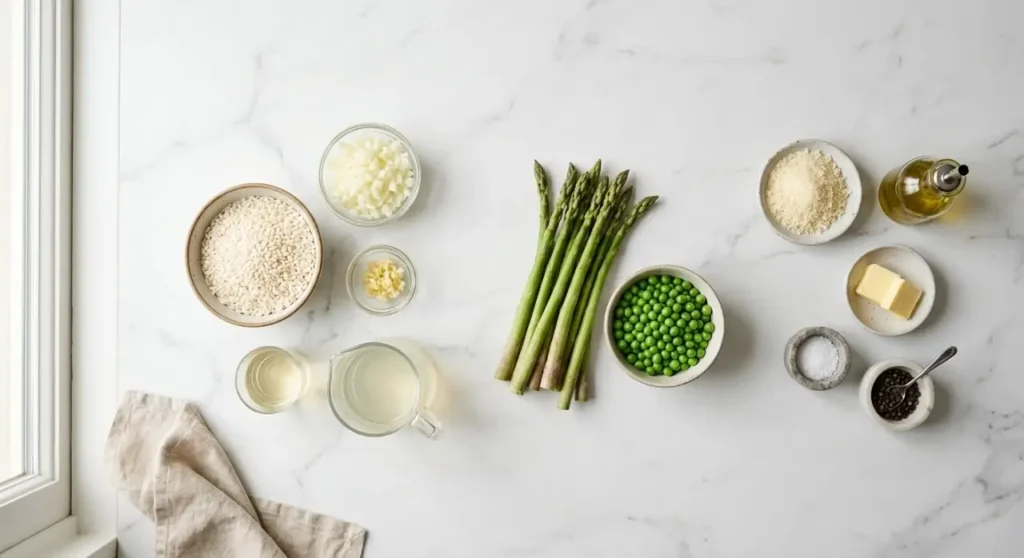
Short list. That’s intentional. The vegetables do the actual work here, and a crowded ingredient list usually just means something’s covering for something else.
Serves 4:
- 300 g arborio rice
- 1 bunch fresh asparagus (about 250 g once trimmed)
- 150 g fresh or frozen peas
- 1 medium onion, finely diced
- 2 garlic cloves, minced
- 120 ml dry white wine
- 1 liter vegetable stock
- 40 g Parmesan, finely grated
- 2 tbsp olive oil
- 1 tbsp cold unsalted butter
- Salt and black pepper
- Optional: lemon zest, fresh mint, chili flakes
On the peas: Frozen is fine. Genuinely. Fresh peas out of season are usually starchy and don’t taste like much. Frozen peas are picked and frozen fast, so the sweetness is often better.
What to skip at the shop: Asparagus with dry, split ends or stalks that bend instead of snap. The tips should be tight. Very thick spears take too long to cook through in the time the rice gives you, and they go stringy. Medium-thin is what you want.
Ways to Change It Up
Lemon and fresh mint. A teaspoon of lemon zest and a handful of torn mint stirred in at the end. It makes the whole dish brighter. Good with a simple green salad alongside.
Mushroom and pea. Sauté 150 g of sliced cremini mushrooms with the onion before the rice goes in. It adds an earthiness that sits well against the sweetness of the peas. Works as a standalone dinner or next to roast chicken.
Chili and Pecorino. Swap the Parmesan for Pecorino Romano and add a pinch of dried chili with the garlic. Sharper, a bit more heat. Good if you want something with more edge. Pairs well with something cold to drink and crusty bread.
Fully vegan. Use a good olive oil for the final stir-in instead of butter, and skip the cheese or use nutritional yeast. The texture is slightly different but it still works. A chickpea salad on the side makes it a full meal.
Smoked mozzarella. Tear about 80 g into small pieces and stir in with the butter at the very end. It melts into soft pockets through the rice. Serve immediately because it firms back up quickly. Good as a dinner party first course.
One practical note: if you’re trying a variation for the first time, make the base recipe as written first. Once you know how your pan behaves and where your timing lands, adjusting is much easier.
Leftovers
Risotto keeps in the fridge for up to 3 days in a sealed container. Get it in there within 2 hours of cooking.
It does not freeze well. The starch breaks down and what comes out is gluey and flat. It’s a dish you eat within a few days or you find a way to use it up.
Reheating on the stovetop is worth the extra 5 minutes. Put it in a pan over medium-low heat with about 3 tablespoons of stock or water per portion. Stir regularly. The liquid wakes the starch back up and you get close to the original texture. High heat will make it stick and clump.
Microwave if you must: Add a tablespoon of water, cover with a damp paper towel, and heat in 60-second bursts, stirring between each. Two minutes is usually enough. It works for a quick lunch. It won’t be as good.
Three things to do with leftover risotto that aren’t sad:
- Risotto cakes. Press cold risotto into patties, coat in breadcrumbs, pan-fry in olive oil until golden. Eat with a poached egg or dressed greens.
- Arancini. Roll into balls around a small cube of mozzarella, coat in egg and breadcrumbs, air-fry at 200°C for 12 minutes. They travel well and reheat better than you’d expect.
- Risotto frittata. Press leftovers into a greased ovenproof pan, pour over 3 beaten eggs, scatter some Parmesan on top, bake at 180°C for 20 minutes. Slice it cold the next day and put it in a packed lunch.
Questions People Actually Ask
Can I use frozen peas? Yes. They often taste better than out-of-season fresh peas. Add them straight from frozen right at the end of cooking.
What’s the mistake that ruins it most often? Adding stock too fast. If you pour in two or three ladles at once, the rice boils instead of absorbs slowly. The starch releases unevenly and you get mushiness on the outside with a chalky center. One ladle at a time isn’t a suggestion.
Do I need the white wine? No, but it adds an acidity that cuts through the richness of the butter and cheese. If you skip it, add a squeeze of lemon juice when you add the final butter stir. Dry vermouth works as a substitute too.
Can I make it ahead for guests? Partially. Cook the rice to about 75% done, spread it on a baking sheet to stop the cooking, refrigerate. Finish it in the pan with warm stock when you’re ready to serve. Takes about 8 minutes and the texture holds up well.
Why does mine taste bland even after I season it? Usually the stock. Thin or underseasoned stock means the rice absorbs nothing but water for 20 minutes, and salt added at the end can’t fix that. Use a stock that actually tastes like something, or drop a Parmesan rind into it while it warms. That alone changes the depth.
That’s About It
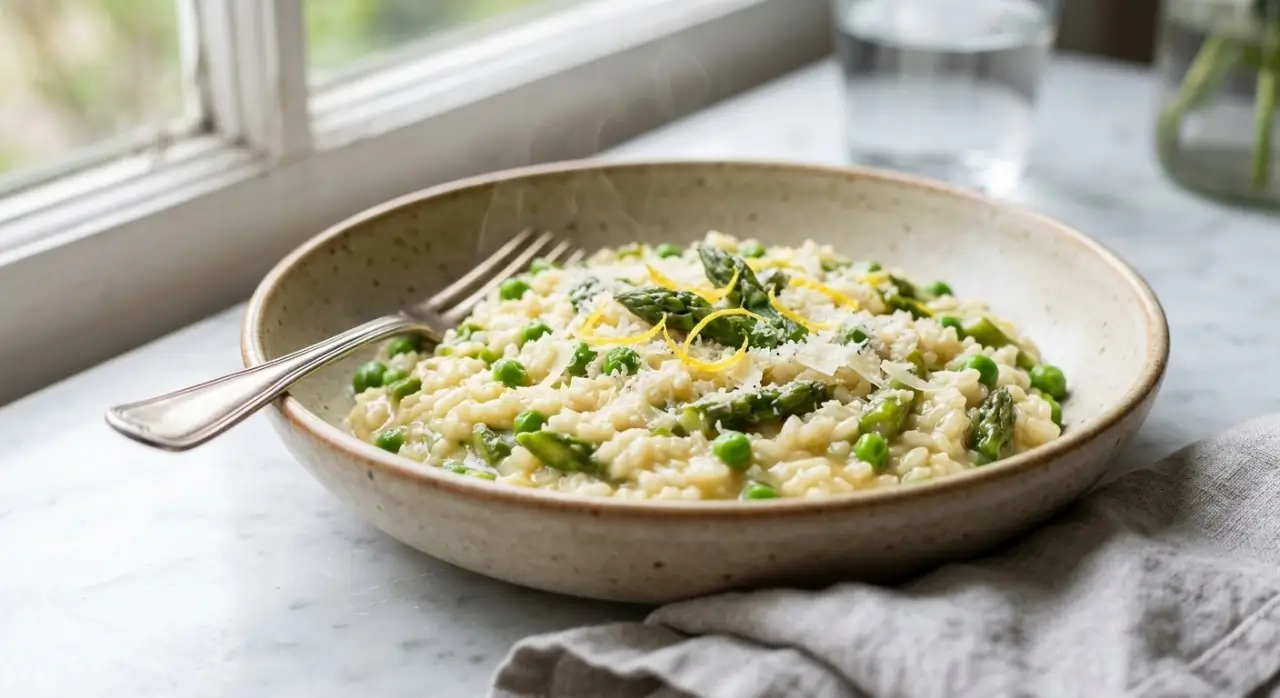
Spring pea and asparagus risotto isn’t complicated once you’ve made it once. The first time you’re watching the heat, second-guessing the stock additions, wondering if the rice is done. The second time it just clicks. Make it while asparagus is actually in season, keep the stock warm, and don’t rush the last few ladles. That’s most of it, honestly.
Spring Pea and Asparagus Risotto
Ingredients
Equipment
Method
- Sauté onion in olive oil until soft and translucent.
- Add arborio rice and toast for 1–2 minutes.
- Pour in white wine and stir until absorbed.
- Add warm vegetable stock gradually, stirring constantly until rice is creamy and cooked.
- Add asparagus and peas during the final minutes of cooking.
- Stir in butter, Parmesan, and lemon juice. Serve warm.