
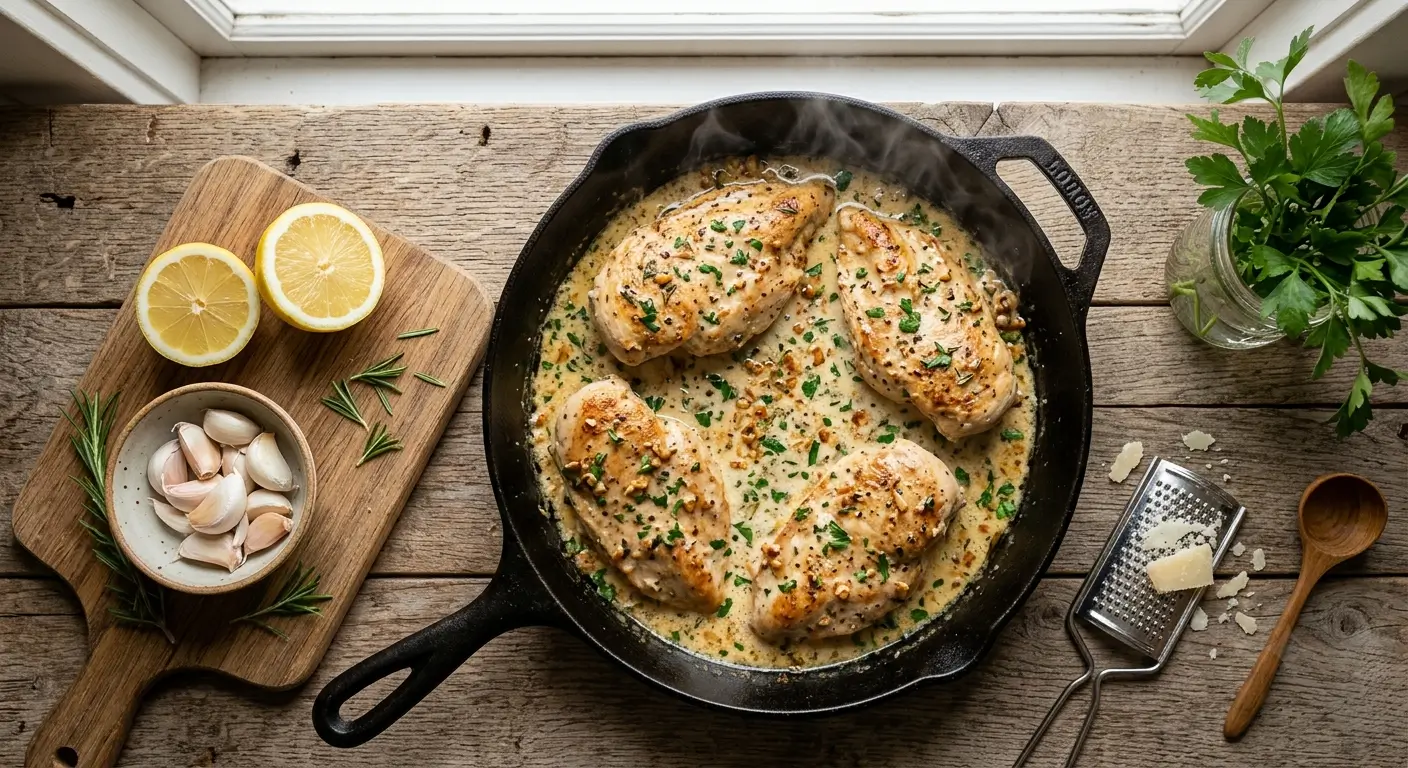
Garlic Butter Chicken Recipe (Easy & Creamy)
I make this garlic butter chicken at least twice a month, and it’s usually because someone in my house asked for it by name. That tells you something. Kids don’t usually beg for chicken breast, but they beg for this one.
The sauce is what sells it. Butter, garlic, a splash of chicken broth, and a little cream come together in the same pan you seared the chicken in, so you’re scraping up all those browned bits that carry the flavor. You end up with a sauce that tastes like it took an hour, but it takes about ten minutes.
If you’ve had dry, bland chicken breast one too many times, this recipe fixes that problem. The chicken gets a quick sear for color, then finishes cooking gently in the sauce so it stays juicy. You don’t need any special equipment or hard-to-find ingredients. Most of this is probably already in your kitchen right now.
Why You’ll Love Garlic Butter Chicken
- It’s on the table in about 30 minutes, start to finish.
- One pan means less cleanup.
- The sauce is rich without being heavy, so it works for a weeknight or a dinner guest.
- You control the garlic. Add more if you’re a garlic person (I am).
- It reheats well, so leftovers actually taste good the next day.
- Works with chicken breasts, thighs, or even chicken tenders if that’s what you have.
- No breading, no deep frying, no complicated technique.
- Pairs with almost any side you already have planned.
Ingredients
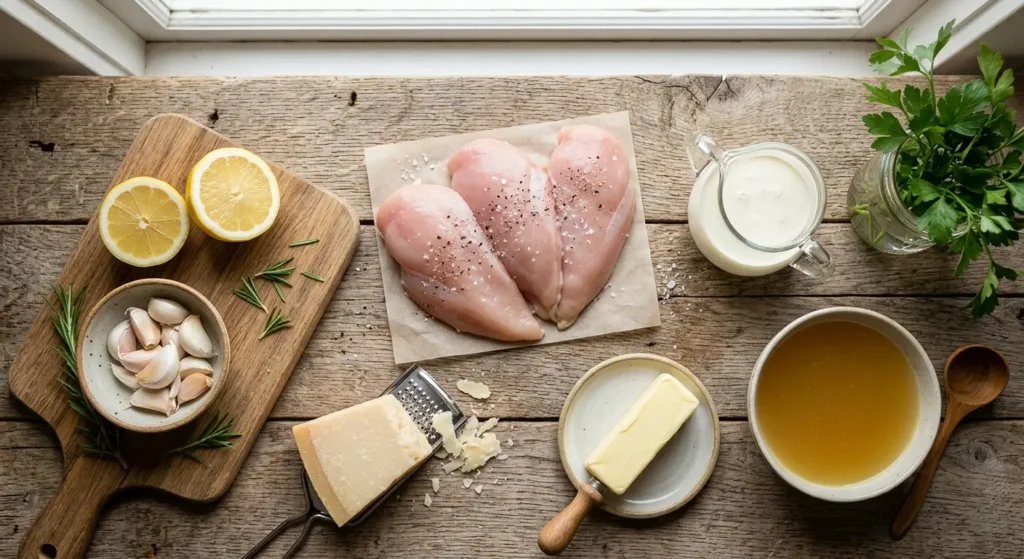
4 boneless, skinless chicken breasts (about 6 oz each) This is your protein. If your breasts are especially thick, slice them in half horizontally so they cook evenly and stay juicy. Chicken thighs work too and are more forgiving if you overcook them slightly.
1 teaspoon salt Seasons the chicken from the inside. Don’t skip this step even if you’re watching sodium; you can always cut back on the salt added to the sauce later.
1/2 teaspoon black pepper Basic seasoning for the chicken before searing.
1 teaspoon paprika Adds color and a mild smoky note. Smoked paprika works if you want more depth.
2 tablespoons olive oil Used for searing. You need a fat with a higher smoke point than butter alone, or the butter will burn before the chicken browns.
4 tablespoons unsalted butter, divided This is the backbone of the sauce. Unsalted lets you control the final saltiness. If you only have salted butter, just reduce the added salt.
6 cloves garlic, minced The star of the dish. Fresh garlic makes a real difference here over the jarred kind. If you love garlic, go up to 8 cloves.
1 cup chicken broth Low-sodium is best so you can adjust salt at the end. This deglazes the pan and thins the sauce to the right consistency.
1/2 cup heavy cream Makes the sauce silky and rounds out the garlic. Half-and-half works if you want it lighter, though the sauce will be thinner.
1/3 cup grated Parmesan cheese Adds salt, depth, and helps thicken the sauce slightly. Use freshly grated if you can; pre-shredded cheese has anti-caking agents that can make the sauce grainy.
1 tablespoon fresh lemon juice Cuts through the richness of the butter and cream. Don’t skip this. It’s a small amount but it changes the whole dish.
1 teaspoon Italian seasoning A shortcut for dried basil, oregano, and thyme. Feel free to use fresh herbs instead, about a tablespoon total.
2 tablespoons chopped fresh parsley For garnish and a little freshness at the end. Dried parsley works in a pinch but won’t have the same brightness.
Optional: 1/4 teaspoon red pepper flakes For a little heat. Completely optional but worth trying at least once.
Equipment Needed
- Large skillet (12-inch, stainless steel or cast iron works best for browning)
- Meat thermometer
- Cutting board
- Sharp knife
- Measuring cups and spoons
- Wooden spoon or silicone spatula
- Garlic press or knife for mincing
Ingredient Notes
Chicken breast size matters more than most recipes admit. A 6 oz breast cooks in about 6 to 7 minutes per side. If yours are closer to 10 oz, you’ll need extra time, and the outside can dry out before the inside finishes. Pounding them to an even thickness, or slicing them in half, solves this.
Heavy cream is what gives this sauce its texture. If you use milk instead, the sauce will be thinner and more likely to separate when reheated. If you’re dairy-free, coconut cream is the closest swap, though it adds a faint coconut flavor.
Parmesan should go in off direct heat or on low heat. High heat can cause it to clump instead of melting smoothly into the sauce.
Step-by-Step Instructions
1. Season the chicken (2 minutes) Pat the chicken breasts dry with a paper towel, then season both sides with salt, pepper, and paprika. Drying the chicken first matters because wet chicken steams instead of browning. You want a dry surface for a good sear.
2. Heat the pan (2 minutes) Add olive oil to a large skillet over medium-high heat. Let it heat until it shimmers slightly but doesn’t smoke. If the oil is smoking, it’s too hot and will burn the chicken’s exterior before the inside cooks.
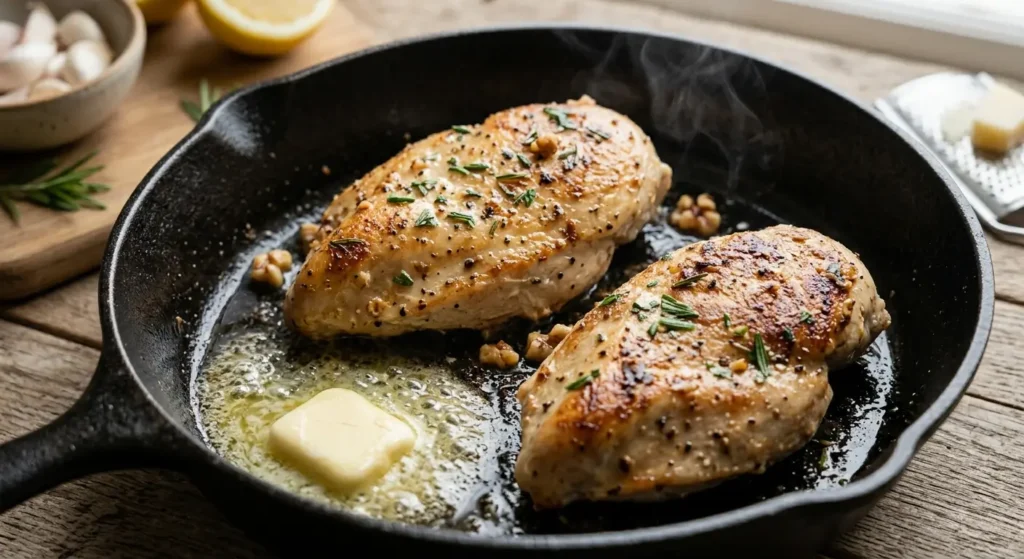
3. Sear the chicken (10 to 12 minutes total) Place the chicken in the pan without crowding it. Cook for 5 to 6 minutes per side, until golden brown and the internal temperature reaches 165°F. A common mistake here is moving the chicken too soon. Let it sit undisturbed so it develops a proper crust. Remove the chicken and set it on a plate, tented loosely with foil.
4. Make the garlic butter base (2 minutes) Lower the heat to medium and add 2 tablespoons of butter to the same pan. Once melted, add the minced garlic and cook for about 30 seconds, stirring constantly. Garlic burns fast, so watch it closely. Burnt garlic turns bitter and will ruin the sauce.
5. Deglaze the pan (1 minute) Pour in the chicken broth, scraping up the browned bits stuck to the bottom of the pan with a wooden spoon. Those bits are concentrated flavor, and this step is what separates a flat sauce from a great one.
6. Build the sauce (4 to 5 minutes) Add the heavy cream, Italian seasoning, and remaining 2 tablespoons of butter. Stir and let it simmer gently for 3 to 4 minutes until it starts to thicken slightly. Keep the heat at medium-low; boiling cream can cause it to break or curdle.
7. Add the Parmesan (1 to 2 minutes) Stir in the Parmesan a little at a time, letting each addition melt before adding more. This prevents clumping and gives you a smooth, even sauce.
8. Finish with lemon juice Stir in the lemon juice right at the end. Adding it too early can make the dairy in the sauce separate.
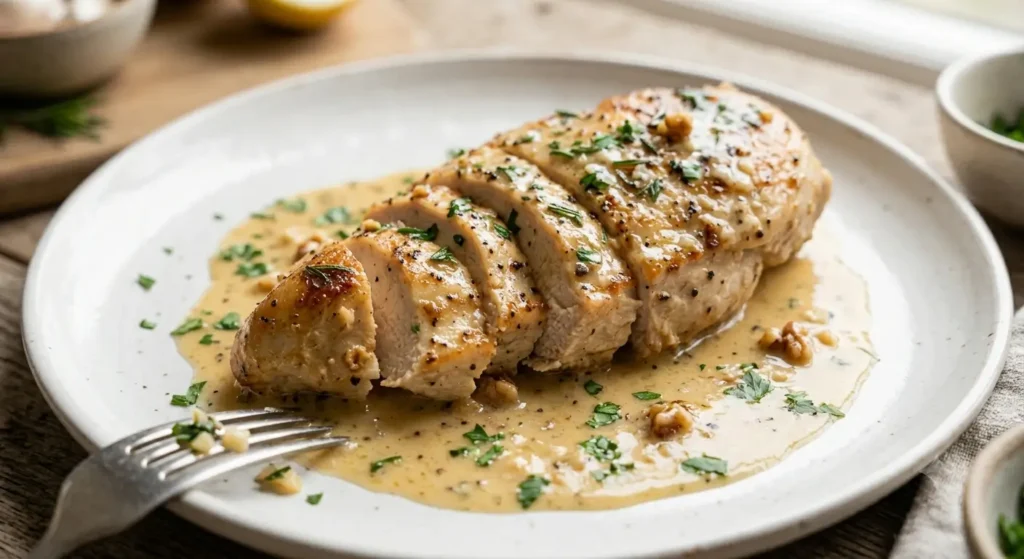
9. Return the chicken to the pan (2 to 3 minutes) Nestle the chicken back into the sauce, spooning some over the top. Simmer for 2 to 3 minutes to reheat and let the chicken absorb some of the sauce.
10. Garnish and serve Sprinkle with fresh parsley and red pepper flakes if using. Serve immediately while the sauce is warm and glossy.
Expert Tips
- Always use a meat thermometer. Chicken breast is done at 165°F, and guessing by color leads to overcooked, dry meat.
- Let chicken rest for 5 minutes after cooking so the juices redistribute instead of running out when you cut it.
- Room temperature chicken sears more evenly than chicken straight from the fridge. Pull it out 15 to 20 minutes before cooking.
- Don’t wipe the pan clean after searing. Those browned bits are the base of your sauce’s flavor.
- Mince your own garlic. Pre-minced garlic from a jar has a duller, slightly bitter flavor compared to fresh.
- Keep the heat moderate once the cream goes in. High heat is the most common reason cream sauces break.
- Taste before you add extra salt. Parmesan and chicken broth both bring sodium, so you may need less salt than you think.
- If your sauce turns out too thick, thin it with a splash of chicken broth or milk rather than water, which dilutes the flavor.
- If your sauce is too thin, let it simmer uncovered for a few extra minutes instead of adding flour, which can make it gummy.
- Slice chicken breasts in half horizontally if they’re thicker than an inch. It cuts your cook time and helps them cook evenly.
- Use a stainless steel or cast iron pan instead of nonstick if you can. You’ll get better browning and more flavor in your sauce.
Recipe Variations
Healthier version Swap the heavy cream for evaporated milk or unsweetened cashew cream, and reduce the butter to 2 tablespoons total. The sauce will be lighter but still creamy.
Gluten-free This recipe is naturally gluten-free as written. Just double-check your chicken broth and Parmesan brands, since some processed versions include additives with gluten.
Dairy-free Replace the butter with a plant-based butter substitute, and swap the cream for full-fat coconut milk. Skip the Parmesan or use a dairy-free alternative. The flavor shifts slightly but stays rich.
Vegan Replace the chicken with thick slices of firm tofu or cauliflower steaks, seared the same way. Use plant-based butter, coconut milk, and a dairy-free Parmesan alternative or nutritional yeast.
Spicy version Double the red pepper flakes and add a diced jalapeño along with the garlic. A dash of hot sauce at the end works too.
Kid-friendly version Cut the garlic down to 3 cloves and skip the red pepper flakes entirely. Serve over buttered noodles, which kids tend to prefer over rice.
Holiday version Stir in a tablespoon of fresh chopped rosemary and thyme, and finish with a few pats of butter for extra shine. Serve on a platter with roasted vegetables for a dinner-party presentation.
What to Serve With Garlic Butter Chicken
Sides: Mashed potatoes, buttered egg noodles, rice pilaf, roasted broccoli, garlic green beans, or a simple arugula salad.
Bread: A crusty baguette or garlic bread is perfect for soaking up the extra sauce.
Drinks: A dry white wine like Sauvignon Blanc pairs well, or sparkling water with lemon for a non-alcoholic option.
Dessert: Something light like lemon sorbet or a fruit tart works well after a rich main course.
Garnish ideas: Extra Parmesan shavings, a squeeze of fresh lemon, or a few extra fresh herbs on top.
For a different weeknight option using similar pantry staples, check out this garlic herb turkey breast roast.
Storage Instructions
Refrigerator: Store in an airtight container for up to 4 days. The sauce will thicken as it chills, which is normal.
Freezer: This dish freezes reasonably well for up to 2 months, though cream sauces can separate slightly after thawing. Freeze the chicken and sauce together in a freezer-safe container.
Reheating: Warm gently in a skillet over low heat, adding a splash of chicken broth or milk to loosen the sauce. Avoid the microwave on high power, since it can cause the sauce to separate.
Meal prep: Cook the chicken and sauce as directed, then portion into containers with your chosen side. It holds up well for lunches through the week.
Shelf life: 4 days refrigerated, 2 months frozen for best quality.
Troubleshooting
My sauce broke or looks curdled. This usually happens when the cream boils. Lower the heat, and if it’s already broken, try whisking in a small splash of cold cream off the heat to bring it back together.
My chicken came out dry. It was likely overcooked. Use a meat thermometer next time and pull the chicken at 165°F, not a minute later.
My sauce is too thin. Let it simmer a few extra minutes uncovered. The liquid will reduce and thicken naturally.
My garlic tastes bitter. It probably burned. Garlic needs about 30 seconds over medium heat, no more. If it turns golden brown quickly, your pan is too hot.
My sauce is grainy. This is usually from pre-shredded Parmesan, which contains anti-caking agents. Grate your own cheese from a block for a smoother sauce.
Nutrition Information
| Nutrient | Amount per Serving |
|---|---|
| Calories | 420 kcal |
| Protein | 38 g |
| Fat | 27 g |
| Carbohydrates | 4 g |
| Fiber | 0.5 g |
| Sugar | 1 g |
| Sodium | 610 mg |
These values are estimates based on standard ingredient data and will vary depending on exact brands and portion sizes used.
Frequently Asked Questions
Can I use chicken thighs instead of chicken breasts? Yes. Boneless, skinless thighs work well and are more forgiving if slightly overcooked. Cook to the same internal temperature of 165°F.
Can I make this recipe ahead of time? You can make it up to a day ahead and reheat gently on the stovetop. The sauce thickens as it sits, so add a splash of broth when reheating.
Is garlic butter chicken keto-friendly? Yes, this recipe is naturally low in carbohydrates and fits most keto meal plans, especially when served with a low-carb side like cauliflower rice.
Can I use milk instead of heavy cream? You can, but the sauce will be thinner and less rich. Half-and-half is a better middle-ground substitute if you want to lighten it up.
How do I know when the chicken is fully cooked? Use a meat thermometer and check for 165°F at the thickest part. This is more reliable than checking color or cutting into the chicken.
Can I double this recipe? Yes. Sear the chicken in batches so you don’t crowd the pan, then make one larger batch of sauce to combine everything at the end.
Why did my sauce separate? High heat is the most common cause. Keep the sauce at a gentle simmer once the cream is added, not a rolling boil.
Can I freeze garlic butter chicken? Yes, though cream-based sauces can separate slightly after freezing. Reheat slowly and whisk to bring it back together.
What can I use instead of Parmesan? Pecorino Romano is a close substitute. For dairy-free versions, nutritional yeast adds a similar savory note.
Can I make this dish spicier? Yes, add extra red pepper flakes, a diced jalapeño, or a dash of hot sauce along with the garlic.
What’s the best pan for this recipe? A stainless steel or cast iron skillet gives the best browning, which improves the flavor of the sauce.
Can I add vegetables to this dish? Spinach, mushrooms, or sun-dried tomatoes all work well stirred into the sauce during the last few minutes of cooking.
How long does garlic butter chicken last in the fridge? Up to 4 days in an airtight container.
Can I use bone-in chicken? You can, but cooking times will be longer, and it’s harder to get an even sear. Boneless cuts work better for this specific method.
Is this recipe gluten-free? Yes, as written, assuming your chicken broth and Parmesan don’t contain gluten additives.
Conclusion
This garlic butter chicken has earned a permanent spot in my weeknight rotation, and I think it will in yours too. It’s quick enough for a Tuesday night but good enough to serve when people come over. Give it a try this week, and if you make any changes that work well, I’d love to hear about them in the comments.