

Fluffy High Protein Egg Muffins with Cottage Cheese and Spinach
I used to skip breakfast four days out of five. Not because I wasn’t hungry, I was, but because nothing I had was worth the effort at 6:45am. Cereal spiked my blood sugar and left me hungry by 9. Protein bars were fine but I was spending a stupid amount of money on them. Eggs took too long on a Tuesday.
Then I started making high protein egg muffins on Sundays. Specifically, cottage cheese high protein egg muffins. I’d pull a batch out of the oven, let them cool, stick them in a container, and have breakfast sorted for the next four days. No thinking, no cooking, just grab two or three and go.
The cottage cheese is the part people raise an eyebrow at. It sounds like a weird addition, but blended into the eggs it completely disappears. You can’t taste it, can’t see it. What you do get is a creamier texture than plain egg muffins and noticeably more protein per muffin, around 8 grams each, which means three of these high protein egg muffins gives you roughly 24 to 25 grams of protein before most people have had their first coffee.
High protein egg muffins are a high protein breakfast that keeps you full longer. That’s not marketing, that’s just how protein works. These fit whether you’re doing meal prep, feeding a family that needs to scatter by 7:30am, or just trying to stop eating garbage at your desk at 10am because you never had a proper breakfast.
How to Make High Protein Egg Muffins
Preheat the oven to 375°F (190°C) first. While it heats, grease your muffin tin. I mean really grease it, the rim too, not just the cups. Egg muffins stick like crazy if you’re lazy about this step.
- Add 6 large eggs and ½ cup full-fat cottage cheese to a blender. Blend for about 20 to 30 seconds until smooth and uniform. This is non-negotiable. If you just stir the cottage cheese in, you get white lumps through the muffins.
- Season with ½ teaspoon salt, ¼ teaspoon black pepper, and ½ teaspoon garlic powder. Stir.
- Put a small handful of fresh baby spinach in each muffin cup. Roughly 3 to 4 leaves, torn up a bit.
- Pour the egg mixture over the spinach. Stop at three-quarters full. I cannot stress this enough. Fill them to the top and they overflow. Every time.
- Add any toppings, a pinch of shredded cheese, some diced pepper, whatever you like.
- Bake 18 to 22 minutes. The centers should be fully set when you pull them, no jiggle.
- Leave them in the pan for 5 minutes before you touch them.
That’s it. Total time around 30 minutes. The 5-minute rest at the end is not optional if you want them to come out in one piece.
What Makes These High Protein Egg Muffins Actually Work
Blending matters more than it seems. Cottage cheese has a lumpy texture that doesn’t smooth out on its own. If you skip the blender and just whisk, those lumps bake into the muffin and the texture gets uneven. It takes one extra minute and it makes a real difference in how the finished high protein egg muffins feel.
Full-fat cottage cheese only. I tried low-fat once. The muffins came out wet in the middle and slightly spongy in a way that wasn’t pleasant. Low-fat cottage cheese releases more water when heated. Full-fat stays stable and gives you that firm, custard-like set in the center.
The fill level really is the thing most people get wrong with high protein egg muffins. Egg mixtures puff up in the oven. Three-quarters full looks conservative when you’re pouring, and then it looks exactly right when they come out. More than that and you’ve got egg dripping down the sides of your tin and muffins that look like they had a rough day.
Silicone muffin molds are genuinely easier for this recipe. Egg and cottage cheese stick hard to metal. If you have silicone, use it. If not, butter or oil every cup heavily, including the flat surfaces between cups where egg inevitably drips.
Don’t open the oven before 18 minutes. This one’s simple. Cool air makes them fall. Start checking at 18, give them a little shake, pull them if the center doesn’t wobble.
“Took me three batches to figure out the fill level thing. The second batch looked exactly like the first one going in and I still somehow thought it would be different. Third batch I actually stopped at three-quarters and they were perfect.”
Ingredients for High Protein Egg Muffins
Makes 12 muffins:
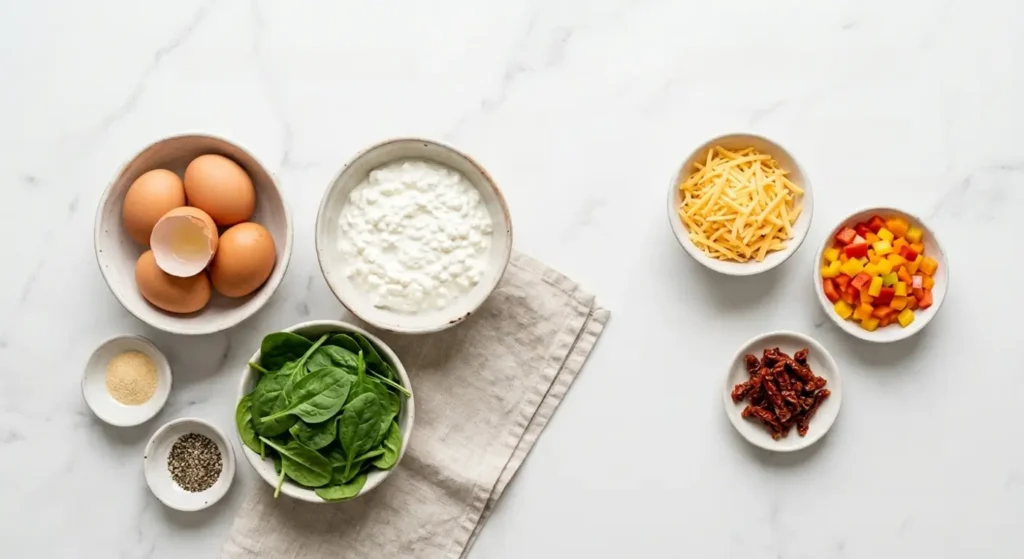
- 6 large eggs
- ½ cup full-fat cottage cheese (about 115g)
- 1 cup fresh baby spinach, roughly chopped
- ½ tsp garlic powder
- ½ tsp salt
- ¼ tsp black pepper
- ¼ cup shredded cheddar or mozzarella (optional but good)
- ¼ cup diced bell pepper or sun-dried tomatoes (optional)
When you’re buying cottage cheese for these high protein egg muffins, flip the container and read the label. Some brands bulk up the texture with corn starch or guar gum. Those additives affect how the egg base sets. You want a short, clean ingredient list. Small-curd or large-curd doesn’t matter since it’s going in a blender anyway.
Use fresh spinach, not frozen. Frozen spinach is basically a sponge full of water. Even when you think you’ve squeezed it dry, there’s more in there. It releases during baking and makes the bottom of the muffins sit in liquid. If fresh isn’t available and frozen is all you have, thaw it completely and press it in a kitchen towel repeatedly until it stops releasing water. Then use less of it.
Variations
The base recipe for these high protein egg muffins is pretty neutral on purpose, which means it takes on other flavors well. Here are the versions I rotate through.
Mediterranean: Crumble in some feta and add a few chopped sun-dried tomatoes. Feta’s salty, so drop the added salt in the base to ¼ teaspoon. Good with sliced cucumber on the side.
Smoky: Add diced cooked chicken sausage or turkey sausage and a pinch of smoked paprika. These pack well for lunch too.
Goat cheese and herbs: Swap the shredded cheese for soft goat cheese dropped in small pieces into each cup. Throw in some fresh thyme or chives. Feels more interesting than the basic version and still comes in as a solid high protein breakfast.
Spicy: Mix diced jalapeño, a little cumin, and a tablespoon of salsa into the egg base before pouring. Serve with avocado slices.
Cheese only, no vegetables: If you’re cooking for someone who won’t eat the spinach, skip it and go heavy on sharp cheddar. Simpler and still high protein.
One thing: if your mix-ins are already salty, feta, parmesan, cured meats, cut the salt in the base by half. Oversalted egg muffins are hard to save.

Storing These
Cool them fully before putting them away. I put mine on a rack for 20 minutes. If you seal them warm, the steam inside the container makes them soggy overnight.
In the fridge, they keep four days in an airtight container. Day 1 and day 2 are the best. By day 4 they’re still fine but the texture starts going a bit rubbery. Anything you know you won’t eat by day 3, freeze.
To freeze, wrap each high protein egg muffin individually in plastic wrap and put them all in a zip-lock bag. They’re good for two months in the freezer.
Reheating from the fridge: oven at 325°F for 8 to 10 minutes gives you the best result. Microwave for 30 to 40 seconds works fine too. Cover with a damp paper towel so the outside doesn’t go tough.
From frozen: microwave 60 to 90 seconds with a damp paper towel, or defrost overnight in the fridge the night before.
If you’ve got leftovers you want to actually use: crumble two of them over salad greens with olive oil and lemon. Or slice them and put them in a wrap with hot sauce. Or eat three alongside some Greek yogurt and you’ve got a real breakfast with 35 grams of protein, no cooking required.
Questions
I don’t have cottage cheese. Can I still make high protein egg muffins? Greek yogurt is the closest substitute, same ratio. Whole-milk plain yogurt is better than low-fat for the same reason full-fat cottage cheese is. The muffins will be slightly denser but still bake fine.
Mine always sink after baking. What’s going wrong? They all sink a little, that’s just what egg muffins do as they cool. If yours are sinking dramatically and the center looks wet, they were underbaked. The center should be fully set before you take them out. A slight wobble means they need another 2 to 3 minutes.
What about frozen spinach? Honestly, avoid it if you can. It holds water no matter how well you squeeze it. Fresh spinach is worth buying. If you’re stuck with frozen, press it as dry as you possibly can and use about half as much as the recipe calls for.
How many days do they last? Four in the fridge. Freeze whatever you won’t eat by day 3. The high protein egg muffins don’t go bad on day 4 exactly but they taste noticeably less good.
What’s the actual protein count? Roughly 7 to 9 grams per muffin with the base recipe. Add cheese and you’re on the higher end. Three high protein egg muffins puts you between 21 and 27 grams of protein total, depending on egg size and what you added.
One Last Thing
High protein egg muffins are one of those recipes where the hardest part is making them the first time. After that it’s just a Sunday habit. The cottage cheese does enough work with the protein and texture that plain egg muffins feel like a downgrade once you’ve tried this version. Make a full batch. Eat them through the week. Adjust the seasoning or add-ins the next time based on what worked.
That’s the whole thing.