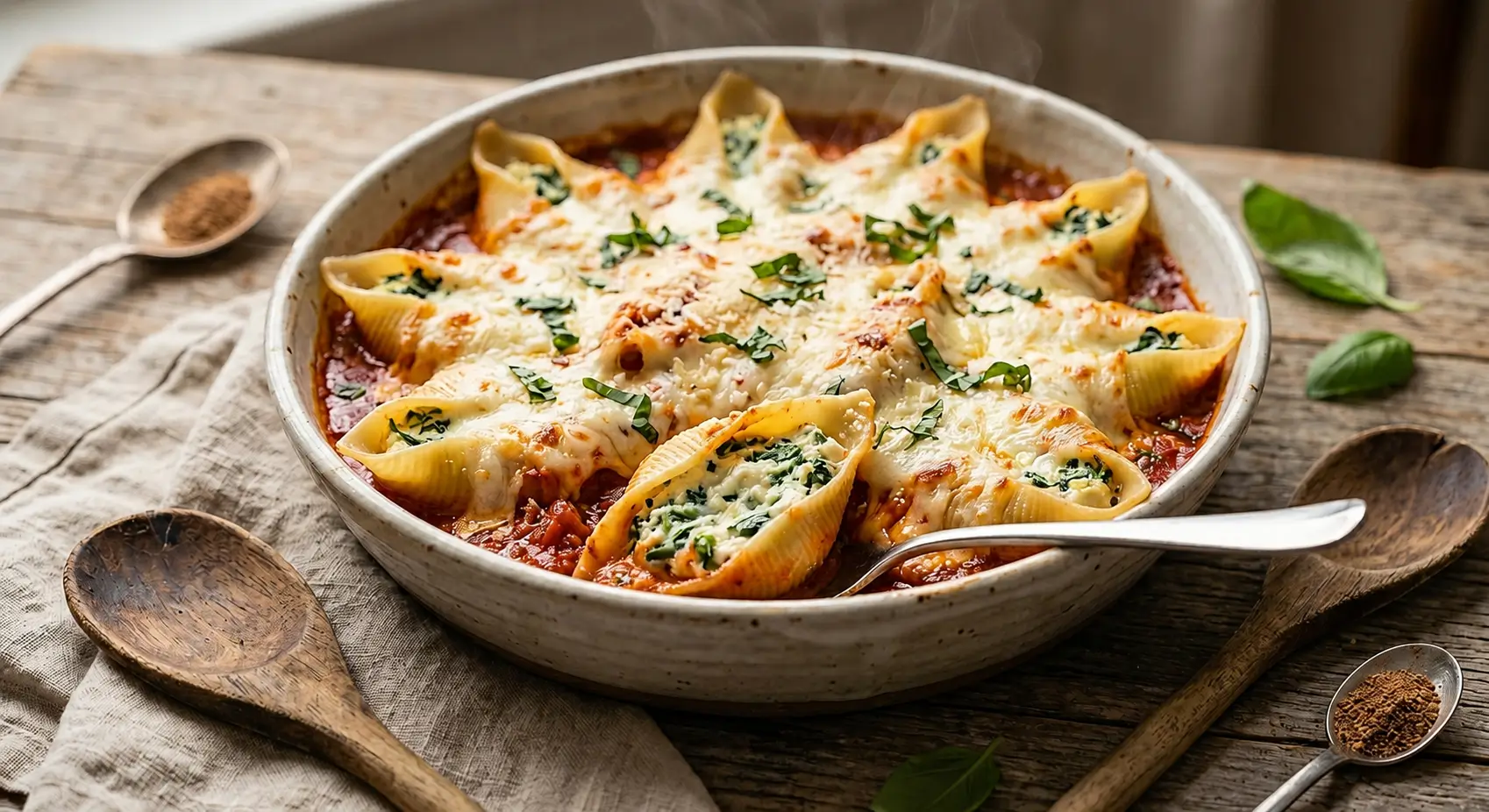
Best Ricotta and Spinach Stuffed Shells for Dinner
There’s a version of this dish I made in my early 20s that was genuinely terrible. Watery filling, shells that split open, sauce that tasted like the inside of a can. I gave up on stuffed shells for a couple of years after that.
Then a neighbor brought a tray to a block party and I had three of them before I asked what she did differently. Turns out I was just overcooking the pasta and not squeezing enough water out of the spinach. That’s basically the whole secret.
I make ricotta and spinach stuffed shells pretty regularly now, mostly in fall and winter when I want something that feels like an actual meal. It’s good for weeknights when you have about an hour, good for feeding four to six people without spending a lot, and good for having leftovers that don’t taste worse the next day. Actually they taste better. The shells soak up the sauce overnight and the whole thing reheats well.
One baking dish. One bowl for the filling. Not complicated once you know what to watch out for.
How to Make Ricotta and Spinach Stuffed Shells
Before you do anything else, understand this: the pasta needs to come out of the water underdone. Not al dente. Underdone. It finishes cooking in the oven inside the sauce, and if it’s already soft when you stuff it, you’ll end up with blown-out shells that look like they gave up.
Here’s how it comes together:
- Get a big pot of water going. Salt it properly — it should taste seasoned, not neutral. Cook your jumbo shells for about 9 minutes. The box probably says 11 or 12 for al dente. Ignore that. Pull them at 9, drain, rinse with cold water, and lay them on a lightly oiled baking sheet. Skip the oil and they’ll stick together and tear when you separate them.
- While the pasta cooks, deal with the spinach. Frozen spinach needs to be fully thawed. Fresh spinach gets wilted in a pan with a little olive oil for two minutes. Either way, what comes next is the most important thing you’ll do in this whole recipe: squeeze the water out. Use a kitchen towel, a few layers of paper towel, your hands, whatever works. Wring it until basically nothing comes out. This is not a step you can rush.
- In a large bowl, mix together the ricotta, squeezed spinach, one egg, about 3/4 of the mozzarella, all the parmesan, salt, pepper, and a small pinch of nutmeg. Stir it well. Taste it before you stuff anything. If it tastes bland now it’ll taste bland after baking. Adjust the salt.
- Stuff the shells. A spoon works fine, or a zip-lock bag with a corner snipped off if you want it neater. About two tablespoons of filling per shell, packed firmly. You want them full.
- Spread roughly half the marinara across the bottom of a 9×13 baking dish. Set the stuffed shells into the sauce in a single layer. Spoon the rest of the sauce over the top, scatter the remaining mozzarella, and cover tightly with foil.
- Bake at 375°F (190°C) for 25 minutes covered, then remove the foil and bake another 10 minutes so the cheese gets some color. Let it sit for 5 minutes before you serve.
On timing: Most people can get from cold ingredients to the oven in about 30 minutes. The bake is 35. Realistically, dinner is ready in just over an hour. If it’s your first time, give yourself 90 minutes so you’re not rushing the spinach step.
Tips Worth Actually Knowing
A lot of stuffed shell recipes tell you what to do without explaining why, so when something goes wrong you have no idea what you did. These are the things that actually changed how mine turned out.
Buy whole-milk ricotta. Part-skim has more water. That extra water ends up in your filling, which ends up in your shells, and the whole thing gets loose and soggy after baking. Whole-milk holds together better and tastes noticeably creamier. You can often feel the difference just picking up the container — it’s denser, heavier. Worth the extra dollar.
The egg is not optional. I skipped it once when I was out of eggs and too lazy to go to the store. The filling crumbled when I tried to stuff the shells, and what did make it in separated in the oven into a greasy ricotta puddle and stringy spinach. One egg holds it together. Don’t skip it.
Sauce thickness matters more than the brand. A watery marinara turns the bottom of your baking dish into a pool. Look for something with real body to it — when you tip the jar it should move slowly. If olive oil is near the top of the ingredient list instead of vegetable oil, that’s usually a decent sign. Any thick marinara works. The brand is less important than the consistency.
Rest the dish when it comes out of the oven. I know. Annoying advice. But five minutes makes a real difference with ricotta and spinach stuffed shells because ricotta stays very loose at baking temperature. A short rest lets the filling firm up enough to hold together when you serve it. Cut into it straight from the oven and everything slides around.
Season at every step. Salt the pasta water. Taste the filling before stuffing. These ingredients are all pretty mild on their own and they need the salt to not taste flat.
“Made these on Sunday, my husband said they tasted like something from a restaurant. I told him it took me 20 minutes of actual work. He didn’t believe me.” — reader comment
Ingredients
Nothing here requires a specialty store. If you have a regular supermarket nearby, you have everything.
Serves 4 to 5
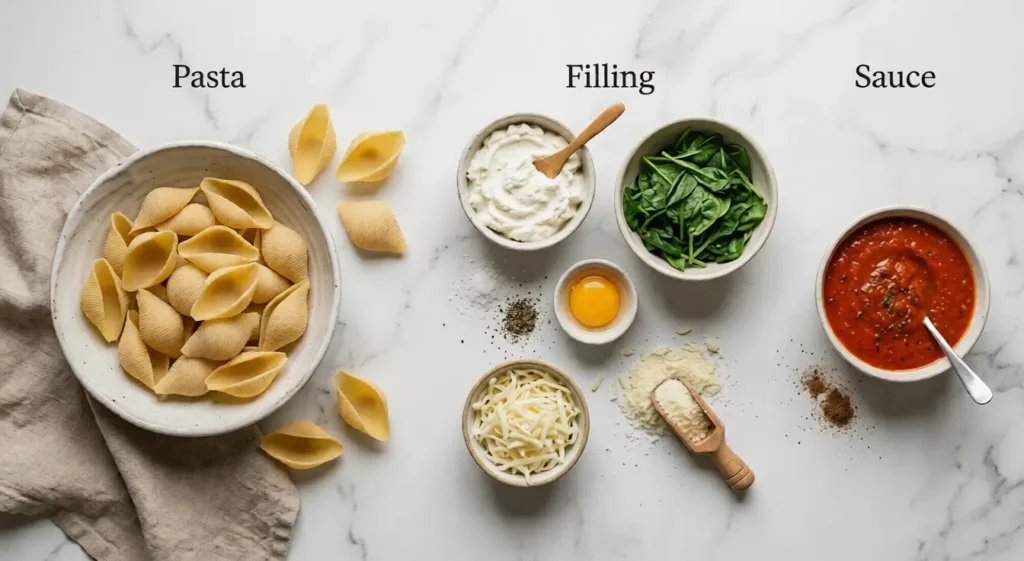
- 1 box (12 oz) jumbo pasta shells — you’ll use 20 to 22, but some crack during boiling so buy the whole box
- 15 oz whole-milk ricotta
- 10 oz frozen spinach, thawed completely and squeezed very dry (or 5 oz fresh baby spinach, wilted and squeezed)
- 1 large egg
- 1 cup shredded low-moisture mozzarella, divided — use 3/4 in the filling, the rest on top
- 1/2 cup grated parmesan
- 1 tsp kosher salt
- 1/2 tsp black pepper
- 1/4 tsp ground nutmeg
- 2 1/2 cups marinara sauce
Skip anything labeled fat-free ricotta. The texture is grainy, it doesn’t combine well with the rest of the filling, and you can taste the difference. Part-skim works in a pinch. Whole-milk is what the recipe is built around.
If you can only find a 15 oz bag of frozen spinach, thaw the whole thing, squeeze it hard, and use roughly two-thirds. Freeze the rest or add it to something else that week.
Ways to Change It Up
The base ricotta and spinach stuffed shells recipe is mild in a way that takes additions well.
Add sausage to the filling. Brown about half a pound of Italian sausage with the casings removed. Let it cool slightly, break it into small pieces, and fold it into the ricotta mixture. Turns the whole thing into a more filling dinner. Good with garlic bread and a simple salad.
Sun-dried tomatoes and basil. About 3 tablespoons of chopped sun-dried tomatoes and a good handful of torn fresh basil mixed into the filling adds a sharp, sweet note that cuts through the mild ricotta. Works well with arugula on the side.
Swap half the spinach for roasted butternut squash. Mash it and fold it in. The filling turns slightly sweet and denser. If you go this route, skip the marinara and use a sage-brown butter sauce instead. Different dish entirely but it’s good.
The arrabiata version. Use arrabiata sauce instead of regular marinara and add a pinch of red pepper flakes to the filling. Enough heat to be interesting, not overwhelming. Serve with something cooling alongside — cucumber, plain yogurt, something like that.
Extra cheese on top. After you pull the foil for the last 10 minutes of baking, lay a few slices of fresh mozzarella across the top and add another handful of parmesan. Throw it under the broiler for 2 minutes at the end. This is the version I make when someone’s coming over.
One note on wet additions: squash, extra vegetables, anything with moisture in it — drain and dry it before mixing in. Extra water in the filling causes the exact same problems as wet spinach does.
Storing and Reheating
This is genuinely one of the better dishes for leftovers. The pasta absorbs the sauce a bit overnight and everything settles together in a way that makes day-two leftovers taste better than fresh. I’m not exaggerating.
In the fridge, ricotta and spinach stuffed shells keep well for 4 days covered. After that the pasta starts getting soft in a way that’s not great.
For the freezer: you can freeze the fully baked dish, wrapped tightly, for up to 3 months. You can also freeze the whole thing unbaked. Assemble it, cover with foil, and freeze. The unbaked version needs to thaw in the fridge overnight before baking, and add an extra 10 to 15 minutes of covered bake time since it starts cold. Both approaches work.
To reheat in the oven, cover the dish with foil, add a splash of water or a few spoonfuls of extra sauce so things don’t dry out, and bake at 350°F for 20 to 25 minutes. Pull the foil for the last 5 minutes. Slower than the microwave but the texture is much better.
To reheat in the microwave, put a few shells on a plate, spoon some sauce over them, and cover with a damp paper towel. Heat on medium power for 2 to 3 minutes. Medium, not high. High heat makes ricotta grainy and tough.
For leftovers with a little more creativity: chop everything roughly and cook it in a pan with olive oil and extra sauce — it becomes a broken pasta dish and works surprisingly well. Or crack a couple of eggs over leftover shells in a small baking dish, top with cheese, and bake for 15 minutes for an odd but genuinely good baked egg situation. Cold from the container also works if you’re not telling anyone.
Questions People Actually Ask
Can I prep these the day before? Yes, and honestly it’s a good way to do it. Assemble the whole dish, cover it, refrigerate overnight. Add 10 to 15 extra minutes to the covered bake time since everything goes into the oven cold.
My shells keep tearing when I try to fill them. What’s happening? They’re overcooked. Pull them from the water earlier — around 9 minutes even if the box says 11 or 12. They need to be flexible but still have some resistance. Once they’re too soft they collapse when you try to fill them.
What’s the most common reason stuffed shells turn out bad? Wet filling, almost every time. Spinach holds a lot of water, and if you don’t squeeze it out thoroughly, that water goes straight into the ricotta and makes the filling soupy. You end up with loose shells and a watery pool at the bottom of the dish. Squeeze the spinach twice if you have to.
Can I use cottage cheese instead of ricotta? You can. Drain it well first. If the curds are big, blend it briefly until smooth. It won’t be as rich but it works fine as a straight swap. Some people prefer it, actually.
Does the dish have to stay covered the whole time in the oven? Not the whole time. The foil keeps moisture in for the first 25 minutes and helps the pasta finish cooking. The last 10 minutes uncovered gets the cheese golden and lets the sauce reduce slightly. If you leave the foil on the whole time, the top stays pale and a little wet.
Making ricotta and spinach stuffed shells isn’t hard. The filling takes one bowl and about 10 minutes. The pasta, the stuffing, the assembly — none of it is technically difficult. Where people run into trouble is the spinach moisture, pulling the pasta too late, and not tasting as they go. Get those three things right and the rest takes care of itself. Make it once and you won’t need to look at the recipe again.