Refreshing Matcha Overnight Oats with Mango and Coconut
Three months of bad overnight oats. Watery, bland, that gummy texture when oats sit too long in too much liquid. I kept reading that this was supposed to be an easy, practically effortless breakfast — and technically it was easy. It just tasted like paste.
Turns out I was choosing terrible ingredients. Once I swapped in matcha, switched from oat milk to full-fat coconut milk from the can, and started using fresh mango in the morning instead of whatever sad berries I had shoved in the back of the fridge, the whole thing changed. That’s how this version came together. I’ve been making it on and off for close to two years now.
It’s a genuinely good weekday breakfast — the kind you prep on Sunday and pull from the fridge Monday through Thursday without having to think. The base holds for four days. On Fridays I usually just make eggs. If you’re cooking for more than yourself, four to five jars takes maybe 25 minutes and gets you through the week.
One note before the recipe: this isn’t health food marketing. Matcha has caffeine, coconut milk is high in fat, mango is sweet. It tastes good. That’s the actual reason to make it.
How to Make Matcha Overnight Oats with Mango and Coconut
No cooking. The oats absorb the liquid overnight and that’s the whole method. About seven minutes of work the night before.
- Put 80g (roughly ¾ cup) of rolled oats into a jar that has a lid.
- Sift 1 teaspoon of matcha powder into the jar. This step matters more than it seems — unsifted matcha clumps up and those lumps won’t dissolve when you stir them into cold liquid. You end up eating bitter green pockets throughout an otherwise fine jar. Twenty seconds with a small sieve is all it takes.
- Add 1 tablespoon of chia seeds, 1 tablespoon of maple syrup or honey, and a small pinch of salt.
- Pour in 200ml of full-fat canned coconut milk and 60ml of cold water. Stir until the matcha is mixed in and there are no dry oats stuck at the bottom.
- Lid on, into the fridge, at least six hours.
- In the morning: stir it. Too thick? Splash of water, stir again.
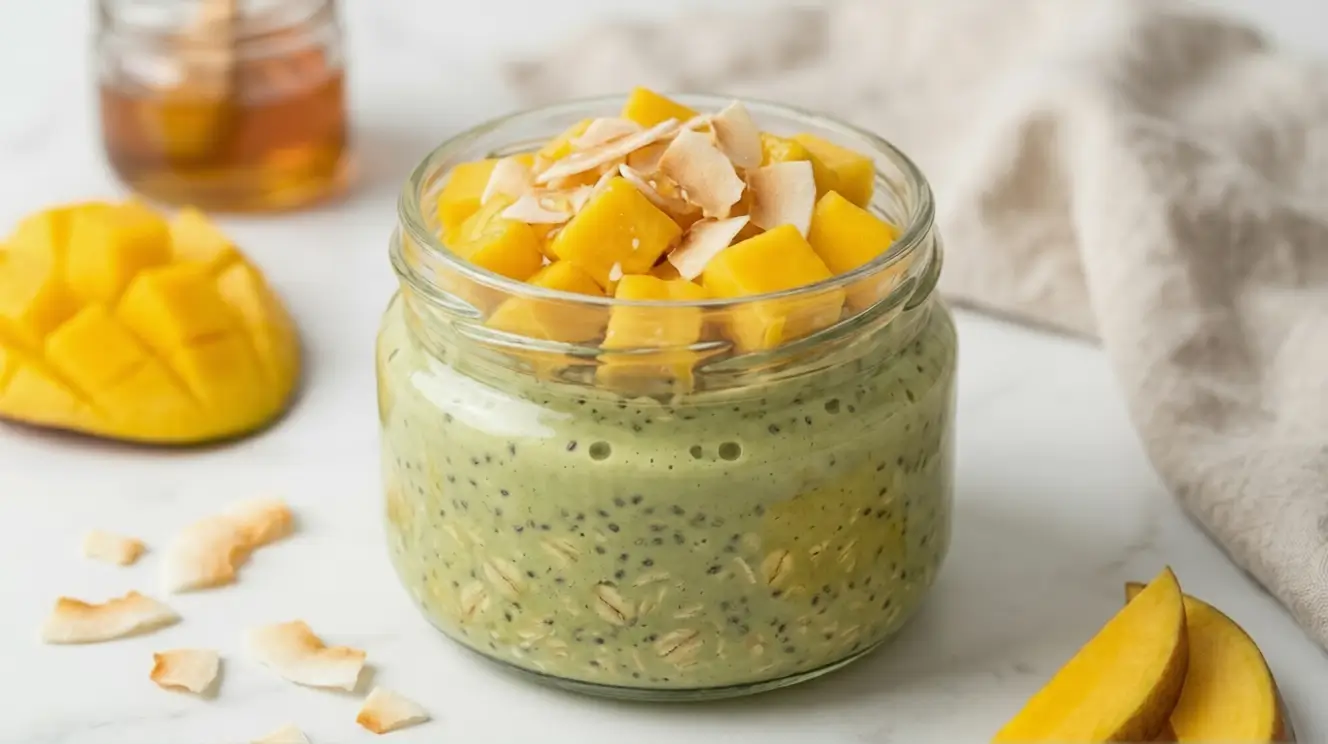
- Dice fresh mango on top, add toasted coconut flakes, drizzle a little honey if you want it sweeter.
The ratio I keep coming back to: 260ml total liquid for 80g of oats. That’s 200ml coconut milk plus 60ml water. Under that and the oats stay dense and don’t fully absorb. Over it and you get soup. I got here through making it wrong a lot, not through any calculation.
Timing: six hours is the floor, eight is better. Steel-cut oats need closer to twelve and stay noticeably chewier — most people don’t love that, but if you do, they work.
Tips for the Best Matcha Overnight Oats with Mango and Coconut
Spend a little on the matcha. Not a lot — a $12 to $15 tin will last you months — but don’t grab whatever powder is cheapest on the shelf. Generic “green tea powder” has a sharp, almost medicinal bitterness that doesn’t soften when mixed into cold liquid. Actual ceremonial or culinary-grade matcha from Japan (look for Uji or Kagoshima on the label) has a rounder flavor with a faint sweetness underneath. If you’ve made a matcha recipe before and found it borderline unpleasant, the matcha was probably the problem, not the recipe.
Shake the coconut milk can before opening it. The fat floats to the top during storage. Pour from an unshaken can and the first jar is half cream, the last jar is mostly water. Thirty seconds of shaking, problem solved. I forgot this once and spent a week wondering why my jars were inconsistent.
Cut the mango fresh every morning. This one cost me a few weeks of soggy jars before I figured it out. Mango releases juice as it sits. Add it the night before and by morning it’s softened and the oats underneath have gone watery. Takes two minutes to dice in the morning. Cold from the fridge, firm, is exactly what you want it to be.
Add the salt. Just ⅛ teaspoon. It doesn’t make it taste salty — it makes the matcha taste less sharp and brings out the sweetness of the mango more clearly. The kind of thing where you notice the jar tastes better but can’t immediately say why.
Toast the coconut flakes while you’re assembling the jars at night. Raw coconut flakes taste waxy and not much else. Three or four minutes in a dry pan over medium heat gets them golden and nutty. They go from pale to burnt faster than you’d expect, so stay close. Let them cool, put them in a small container, add them to the jar in the morning after the mango.
“Made this on a Sunday expecting to use two jars and ended up finishing all five by Wednesday. I’m not a morning person and I actually looked forward to breakfast.” — reader comment
Ingredients
Short list. Most of the pantry items keep for months and show up in other recipes anyway.
Base (per serving):
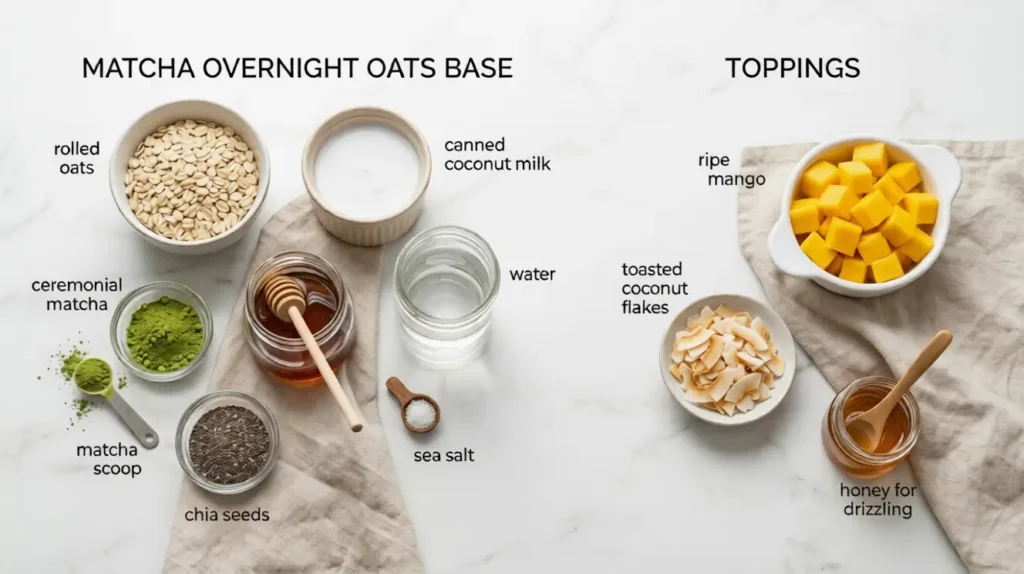
- 80g (¾ cup) rolled oats
- 1 tsp ceremonial or culinary-grade matcha powder
- 1 tbsp chia seeds
- 1 tbsp maple syrup or honey
- ⅛ tsp salt
- 200ml full-fat canned coconut milk
- 60ml water
Toppings:
- 1 ripe mango, diced fresh in the morning
- 2 tbsp coconut flakes, toasted
- Honey to drizzle, optional
Canned coconut milk only — not the carton version, which is watered down for drinking and won’t give you the right texture. If you can’t get canned, oat milk works as a substitute. Add an extra tablespoon of chia seeds when using oat milk to compensate for the lower fat content.
Frozen mango is fine off-season. Defrost it overnight in the fridge in a separate small container and drain the liquid before using it — thawed mango releases a surprising amount of juice and it will water down your oats if you add it all.
On buying matcha: avoid anything labeled “green tea powder” or “matcha blend” without a country of origin. Good matcha says Japan on the label and usually names a region — Uji, Nishio, Kagoshima. Vague label, very low price, probably poor quality.
Flavor Variations
Strawberry and Almond Milk Replace the canned coconut milk with almond milk, swap the mango for sliced fresh strawberries. Lighter, less rich. Good in spring when strawberries are cheap and actually taste like something. Works well alongside a bowl of yogurt if you need more from breakfast.
Pineapple and Lime Keep the coconut milk base, swap in fresh pineapple, and stir ½ teaspoon of lime zest into the oats before they go in the fridge. The lime makes the matcha taste brighter — slightly more acidic in a good way. I make this one in summer, usually with scrambled eggs on the side.
Mango, Coconut, and Turmeric Add ¼ teaspoon of ground turmeric along with the matcha. The color turns a strange murky yellow-green. Tastes better than it looks. Turmeric has an earthy bitterness that works with sweet mango in a way I didn’t expect the first time I tried it.
Banana and Tahini Slice half a banana into the jar before refrigerating. Stir a teaspoon of tahini into the wet ingredients. Noticeably thicker and more filling than the original — better if you have a long morning and won’t eat again until 1pm. Top with sesame seeds.
Mixed Berry Blueberries and raspberries instead of mango, plus an extra teaspoon of honey in the base because berries are tart. That’s it. Simple and good.
Whatever variation you use: keep 200ml of liquid plus 60ml water per 80g oats. The toppings are flexible. The base ratio isn’t.
How to Store and Reheat Leftovers
The oat base keeps for four days in a sealed jar in the fridge. No toppings — add those fresh each morning. I’ve accidentally left a jar until day five and it was fine, but four days is what I’d actually plan around.
Freezing works, but skip the chia seeds before you freeze. Chia seeds turn grainy after freezing and defrosting and the texture isn’t good. Fill containers to about ¾ full (they expand slightly), freeze for up to two months, and move to the fridge the night before you want to use one.
To reheat:
Oven: transfer to an oven-safe bowl, cover with foil, 160°C (325°F) for 8 to 10 minutes. Even heat, no weird hot spots.
Microwave: add a splash of water first or they’ll dry out. Medium power, 90 seconds, stir, another 30 seconds if needed. Toppings go on after.
Three leftover uses that are actually good:
Blend cold oat base with a banana and a handful of spinach. The oats make the smoothie thick and filling without adding any noticeable flavor. Useful on mornings when you don’t want to eat but know you need to.
Warm the oats, top with a soft-boiled egg, sliced avocado, and a few drops of soy sauce. Sounds odd. The matcha mostly disappears in a savory context. Worth trying once.
Cold leftover oats stirred into Greek yogurt, half and half, with a spoonful of almond butter. Takes about 90 seconds. Filling and high in protein and requires exactly zero prep.
Common Questions
Can I use instant oats? They’ll turn to mush overnight. If that’s all you have, soak for two hours max — not overnight.
How much caffeine is in this? About 70mg per teaspoon of matcha, which is roughly half a cup of coffee. If you’re sensitive, use half a teaspoon and go from there.
What’s the most common mistake? Not sifting the matcha. It clumps in cold liquid and stays that way no matter how long you stir. Bitter, gritty pockets through the whole jar. Sift first, before anything else goes in.
Is it dairy-free? Yes. Canned coconut milk has no dairy. Check your oats and matcha packaging if cross-contamination is a concern for you.
Can I add protein powder? Yes — vanilla or unflavored, stirred in with the dry ingredients. Add an extra 30ml of liquid since protein powder absorbs more than you’d expect. Chocolate powder doesn’t work here; it fights with the matcha.
I still make this most weeks. Not because it’s the most exciting breakfast I know, but because it works and costs almost no time. Prep a few jars on a Sunday, keep them in the fridge, and you don’t have to think about breakfast again until Friday. If that’s useful to you, give Matcha Overnight Oats with Mango and Coconut a try.