Easy Baked Feta with Cherry Tomatoes and Basil Recipe
I made this by accident. Block of feta that needed using, cherry tomatoes going soft on the counter, olive oil, garlic, oven. Didn’t think much about it.
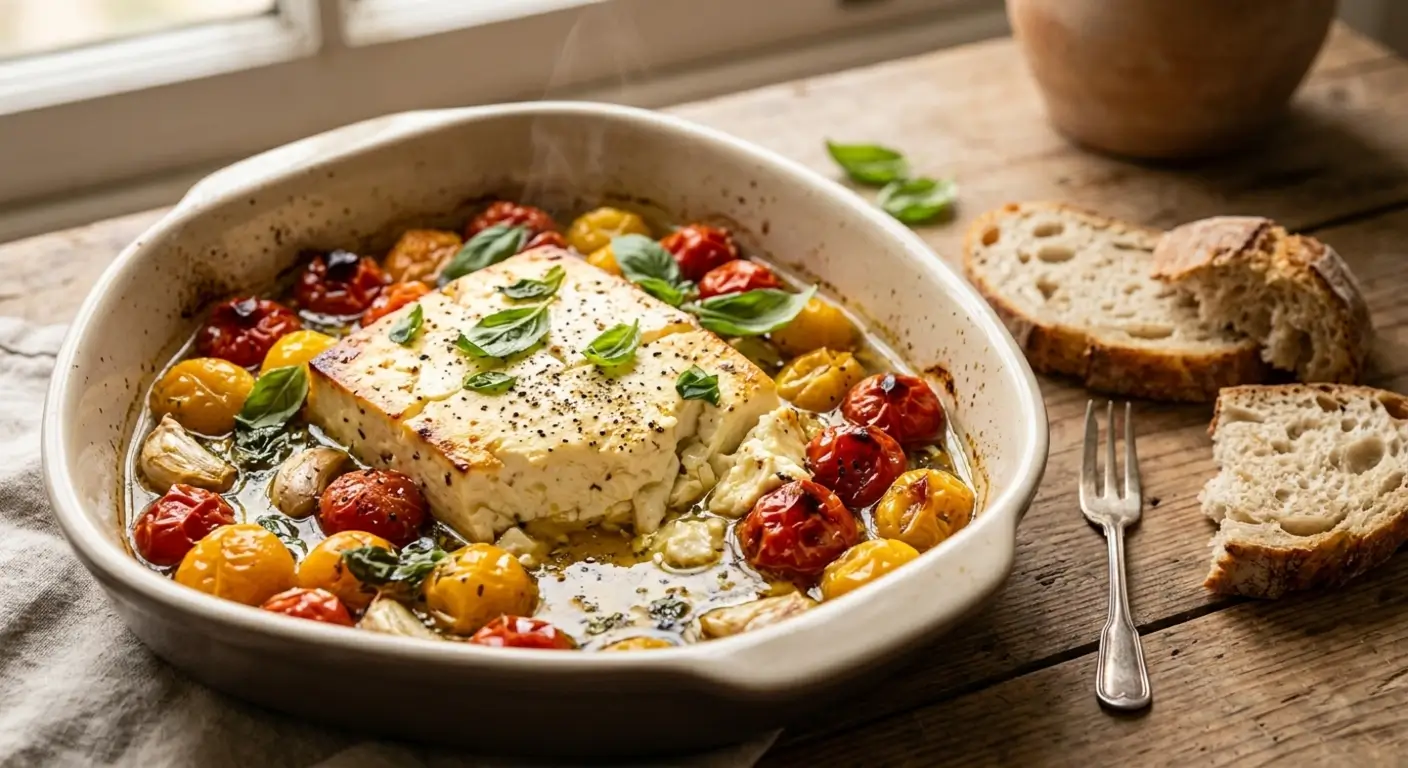
Half an hour later the tomatoes had burst into something almost like a sauce and the feta was this soft, salty, golden thing that I stood and ate over the sink before I even got a plate. My husband walked in, looked at the state of the dish, and asked if there was any left.
There wasn’t. I made it again the next week.
That was a few years back. It’s in regular rotation now, more than almost anything else I cook. I’ve made fancier things that I’ve made once and forgotten. This one I keep coming back to.
It’s useful on a weeknight because there’s nothing to it — put the ingredients in a dish, oven on, done — and it’s also genuinely good at a table with friends, which is a combination that’s harder to find than it sounds. If you’ve never tried baked feta with cherry tomatoes and basil, this is a solid place to start.
What You Need for Baked Feta with Cherry Tomatoes and Basil
Short list. Most of it is probably already in your kitchen.
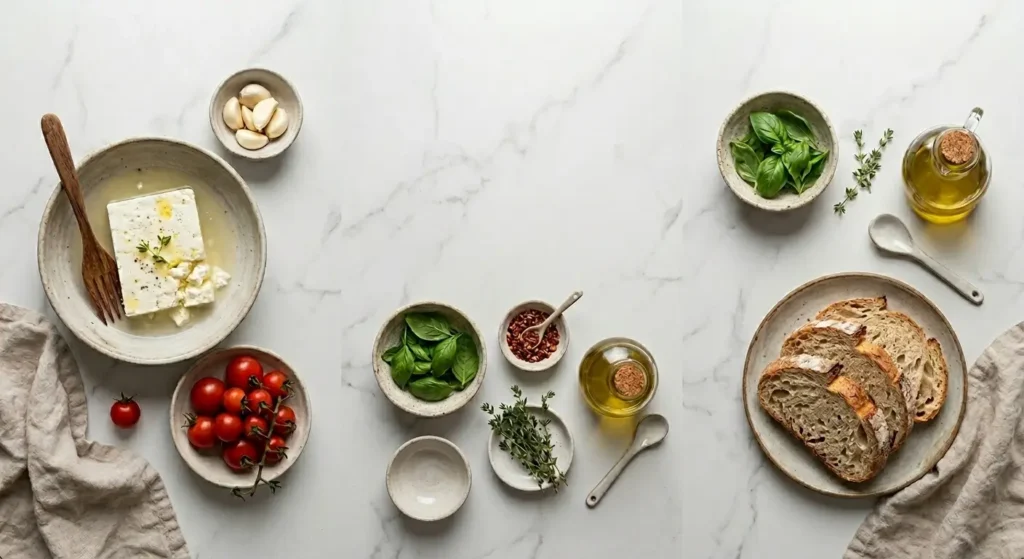
- 200g block of full-fat Greek feta, in brine
- 300g cherry tomatoes
- 3–4 garlic cloves, peeled and left whole
- 3 tablespoons extra-virgin olive oil
- 10–12 fresh basil leaves
- ¼ tsp red pepper flakes (optional but I usually add them)
- A few sprigs of fresh thyme (also optional)
- Crusty bread for serving — this part is not optional
On buying feta: The label should say “sheep’s milk” or “sheep and goat’s milk.” Feta made from pure cow’s milk is rubbery and doesn’t go creamy in the oven the same way. Bulgarian feta is fine if Greek-style isn’t there. What to skip: anything called “feta-style,” “Greek salad cheese,” or anything that doesn’t just say feta. These are cow’s milk and will crumble and dry out. You can usually tell in the packet — real feta feels dense and slightly damp. Dry and chalky before it even hits heat means it’ll be worse after.
For the tomatoes, smaller is better. Cherry or cocktail tomatoes are ideal. Grape tomatoes work but take an extra few minutes to really burst open. Don’t use Roma or vine tomatoes here — they won’t break down in 30 minutes and you’ll end up with big undercooked chunks sitting next to a soft block of feta, which isn’t what you want.
How to Make Baked Feta with Cherry Tomatoes and Basil
Preheat your oven to 200°C (400°F). This matters — you want it fully up to temperature before the dish goes in, not still climbing.
Put the feta block in the center of a small baking dish. I use something around 20x15cm. Scatter the tomatoes around it. They should look crowded; that’s correct. Tuck the garlic cloves in between. Pour the olive oil over everything, making sure the top of the feta gets coated. Add the pepper flakes and thyme if you’re using them.
Bake uncovered for 25–30 minutes, until the tomatoes have blistered and collapsed and the feta has gone golden on top.
Take it out. Tear the basil over it. Serve it immediately from the dish, with the bread.
The thing that actually matters: dish size. Too large and the tomatoes spread out with space between them. Their juices evaporate instead of pooling. You get dry, shriveled tomatoes and feta that’s chalky rather than creamy. Everything needs to be packed together so the tomatoes steam into each other, burst, and mix with the oil to form a sauce. If you only take one thing from this whole recipe, take that.
Timing is usually around 28 minutes in most ovens. Cold feta from the fridge or larger tomatoes, add 5 minutes. The feta is ready when it gives slightly under a gentle press and has some actual color on top — not just warm, but golden.
Five Things Worth Knowing Before You Make It
Buy a block, not the pre-crumbled stuff. Pre-crumbled feta has less moisture and the texture after baking is just worse — grainy, dry, slightly sad. A solid block has a softened creamy interior with a browned exterior. That contrast is most of the reason people like this dish. Pre-crumbled skips it entirely.
Leave the brine alone. Pat the block dry with a paper towel so excess moisture doesn’t make it steam. But don’t rinse it. The residual brine seasons the tomatoes as everything cooks. Rinse it off and the final dish tastes noticeably flat — I’ve made this mistake and regretted it.
The basil is not a garnish you add before it bakes. I know it seems like it would be nice. It turns completely black in about four minutes at that heat and has no flavor left. Tear it over the dish the second it comes out of the oven. The residual heat wilts it just enough.
Actually use three tablespoons of olive oil. It sounds like a lot. It is a lot. It is also what makes the bottom of the dish into a sauce rather than a puddle of evaporated tomato. That’s what you’ll be soaking bread in. Don’t go light on it and then wonder why there’s nothing to dip into.
Wait two minutes before you eat it. Cherry tomatoes are essentially liquid heat at this point. Eat one straight out of the oven and you’ll regret it. Two minutes is enough. Set it on the table, get plates, pour drinks — by the time everyone sits down it’s the right temperature.
“I skipped the thyme because I didn’t have it, used dried oregano, still tasted good. My boyfriend asked if we were having it again this week. We were.” — Rachel
Variations
The base dish is plain enough that it takes well to additions. These are the ones I’ve made more than once.
Olives and sun-dried tomatoes. Throw in a handful of halved kalamata olives and a few chopped sun-dried tomatoes before it bakes. The olives add salt and brine, the sun-dried tomatoes punch up the tomato depth. Good served with pita as a starter, or on its own as a snack with drinks.
Honey and walnuts. This one I was skeptical about. In the last five minutes of baking, drizzle a small amount of honey over the feta and scatter some roughly chopped walnuts on top. The honey just barely caramelizes. It’s sweet and salty in a way that works. Eat it with flatbread.
Roasted red peppers. Replace roughly a third of the cherry tomatoes with strips of jarred roasted red pepper. They go soft and sweet in the oven and add a smoky background flavor. Spoon the whole thing over pasta. Genuinely one of the better quick pasta sauces I know.
Za’atar and lemon. Dust a teaspoon of za’atar over the feta block and add a few strips of lemon zest to the pan. Completely changes the flavor profile — suddenly it’s more Middle Eastern than Mediterranean, more herby and bright. This version with warm pita is something I make when I can’t decide what I want for lunch.
Harissa. Thin layer spread over the top of the feta before baking. Be careful with how much — harissa varies wildly by brand, and some are seriously hot. Start with less than you think you need. Serve it with couscous or scoop it into a flatbread.
Side note on all of these: if it’s your first time making a variation, do the original-sized batch. Much easier to adjust than trying to scale up something you haven’t made before.
Storing and Reheating
It keeps in the fridge for up to 3 days in an airtight container. The feta firms back up when cold and the tomato juices turn a bit gel-like, but heat brings everything back.
Don’t bother freezing it. Feta after freezing and thawing is crumbly and weirdly dry, and the tomatoes become mush. This is a fresh-batch kind of dish.
To reheat properly: put it in a small oven-safe dish, cover with foil, heat at 180°C (350°F) for about 10 minutes. Pull the foil off for the last couple of minutes. That’s the method worth using.
If you need it fast: microwave on 70% power in 45-second bursts, loosely covered. It won’t look as good but it tastes fine. About 90 seconds total.
What to do when there’s leftovers:
Mash the feta and tomatoes together with a fork and toss through cooked pasta with a bit of pasta water and extra basil. This takes as long as boiling the pasta takes. It’s a real meal.
Spoon it cold over cooked farro or quinoa with a handful of arugula and some extra oil. Decent enough that I sometimes make extra on purpose.
Heat it in a small skillet, crack two eggs directly into the tomatoes and feta, put a lid on the pan, wait until the whites are just set. Ten minutes. Actually a good breakfast.
Common Questions
Can I use a different cheese? Technically yes, practically no — not if you want this specific dish. Halloumi won’t melt or go creamy; it just browns and stays firm. Goat cheese softens similarly to feta but it’s tangier and it spreads across the pan. Bocconcini turns rubbery fast. The reason this recipe works is feta specifically.
Should I cover it with foil while it bakes? No. The browning on top of the feta and the blistering on the tomatoes both need dry oven heat. Cover it and everything steams. You lose the texture that makes it worth eating.
What do people usually get wrong? The dish size, by far. I’ve made this in too-large a pan at least three times before I stopped. The tomatoes need to be cramped. If there are gaps between them, something is wrong before it even goes in the oven.
Can I make it ahead of time? You can assemble everything in the dish and leave it in the fridge for up to 4 hours before baking. Take it out around 15 minutes before it goes in the oven so the feta has time to lose some of its fridge cold. Don’t bake it ahead and try to reheat it later — the feta gets grainy.
What goes with it? Good bread, and a lot of it. That’s the real answer. If you want a full meal out of it, serve it over pasta or alongside something simple — roasted vegetables, a green salad. The feta and tomatoes are rich enough that the rest of the plate should be fairly plain.
This is the recipe I’d hand to someone who thinks they’re bad at cooking. Baked feta with cherry tomatoes and basil requires almost no skill — just a correctly sized dish and enough olive oil. Make it once and you’ll understand why it keeps showing up at weeknight dinners without anyone needing to think too hard about it.