Lemon Tart with Shortbread Crust
My mother-in-law makes lemon tart every Easter. For years I assumed it was complicated. Turns out she’s been using the same straightforward method since the 80s, and the only reason it looks impressive is because lemon curd is genuinely beautiful when it sets properly.
This is her method, more or less, with a few things I changed after making it badly twice.
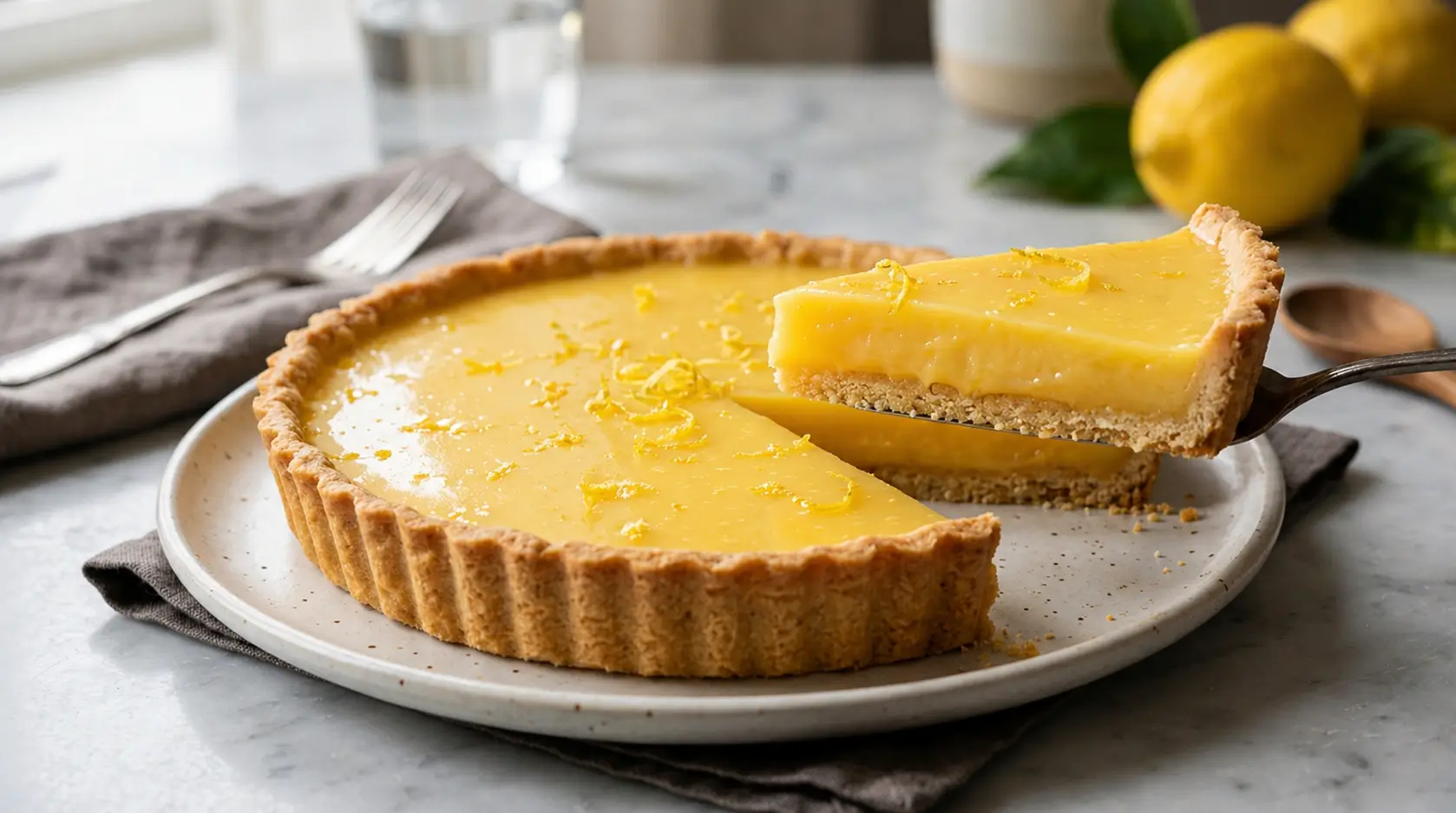
The shortbread crust is thick and sandy. The filling is sharp, properly sharp, not the sweetened-lemon-flavored cream you get from most bakeries. Eaten cold, straight from the fridge, it’s one of the better things you can put on a table after dinner.
What You’ll Need
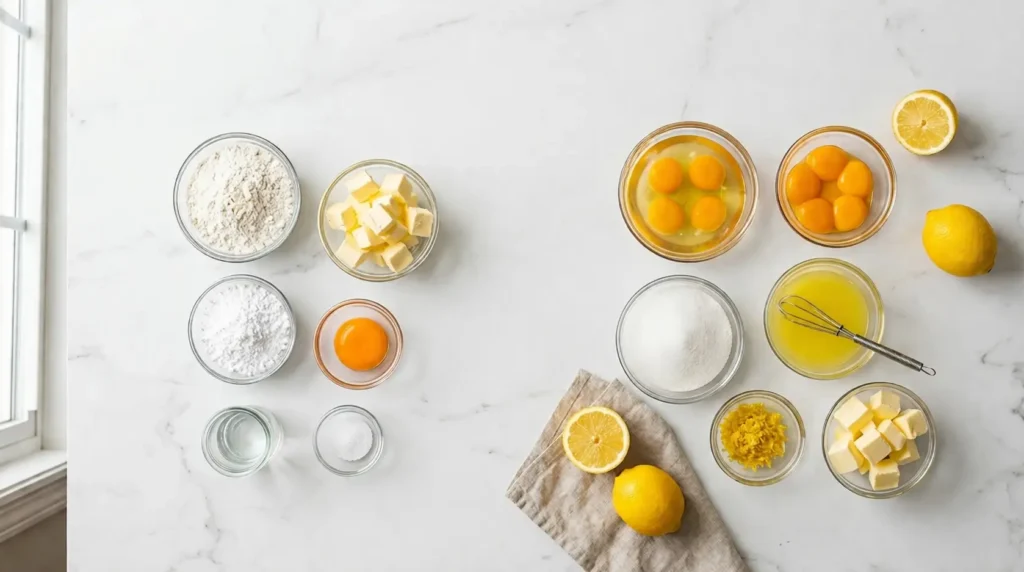
The crust:
- 200g (1¾ cups) all-purpose flour
- 100g cold unsalted butter, 7 tablespoons, cut small
- 50g (¼ cup) powdered sugar
- 1 egg yolk
- 2 tablespoons cold water
- Pinch of salt
The filling:
- 4 whole eggs plus 4 yolks
- 200g (1 cup) granulated sugar
- 150ml fresh lemon juice, you’ll need about 5 lemons
- Zest of 2 lemons
- 150g unsalted butter, about 10 tablespoons, cubed
- Pinch of salt
The extra yolks in the filling are not optional. They’re what makes the curd rich and smooth rather than eggy and loose. Don’t skip them.
Making the Crust
Mix the flour, powdered sugar, and salt in a bowl. Add the cold butter and rub it into the flour with your fingers until it looks like rough, uneven crumbs. Add the egg yolk, mix through, then add cold water a tablespoon at a time until the dough just holds together when you press it.
It should feel slightly dry and crumbly. If it feels smooth and soft like bread dough, it has too much water and the baked crust will be tough.
Shape it into a flat disc, wrap it, refrigerate for 45 minutes.
When you’re ready, roll it on a floured surface to about 3mm thick and press it into a 23cm tart pan with a removable bottom. Trim the edges, prick the base about 20 times with a fork, then put the whole thing back in the fridge for another 25 minutes.
That second chill is the step I skipped the first time I made this. The sides of my crust collapsed completely and I had a flat, misshapen base with walls that leaned inward. Chilling it after lining the pan is not optional.
Bake at 180°C (350°F) with parchment and baking weights for 15 minutes, then remove the weights and bake another 10-12 minutes until the base is dry and pale gold. Cool it completely before adding anything.
The Lemon Curd
Whisk the eggs, yolks, sugar, lemon juice, zest, and salt together in a medium saucepan. Put it over low to medium-low heat and stir constantly. Don’t stop stirring, don’t turn your back on it, don’t answer your phone.
After 8-10 minutes it thickens. You’ll feel it in the spoon before you see it in the pan. Test it by running your finger across the back of the spoon: if the line stays clean, it’s done. Take it off the heat immediately and stir in the butter a few cubes at a time.
If it scrambles, which happens when the heat is too high, strain it through a fine mesh sieve right away. It’s usually salvageable.
Pour the warm curd into the cooled crust, smooth the top, and refrigerate uncovered for at least 3 hours. The next morning it slices better than the same evening. I don’t fully understand the science of that but it’s consistently true.
A Few Things Worth Knowing
Use fresh lemons. Bottled juice works technically but the brightness just isn’t there, and brightness is the whole point of this dessert.
The zest matters as much as the juice. Most of the fragrance is in the zest, not the liquid. Zest both lemons thoroughly before juicing them.
Serve it cold. The curd holds its shape, the crust has clean edges when chilled, and the flavor is sharper. Room temperature lemon tart is a different, lesser experience.
Variations
Lime works exactly the same way with the same quantities. The flavor is slightly more bitter and more perfumed. Worth trying if you make this regularly.
For something less aggressive, Meyer lemons are sweeter and more floral. They make a noticeably gentler tart, good for people who find standard lemon tart too sharp.
Gluten-free: a 1:1 gluten-free baking blend works for the crust. Add half a teaspoon of xanthan gum if it’s not already included. The crust is more fragile but still sliceable when cold.
Storage
It keeps 4 days in the fridge, covered loosely. The crust softens after day two but the filling flavor actually gets better as it sits.
You can freeze the assembled tart for up to a month. Wrap tightly in plastic then foil, thaw overnight in the fridge. The crust loses some of its crispness but it’s still perfectly good.
Common Problems
Crust shrank in the oven: the dough was too warm or you skipped the second chill after lining the pan.
Curd is grainy or scrambled: heat was too high. Strain it immediately through a sieve before it cools and it usually recovers.
Filling didn’t set: either it came off the heat too early or the tart didn’t chill long enough. Give it the full 3 hours minimum, overnight if you can.
Crust is tough: too much water in the dough, or it was overworked. The dough should barely hold together when you press it, not feel smooth and elastic.
FAQs
Can I make this ahead of time? Yes, and you should. The curd and crust can both be made separately 2 days in advance. Assemble the day before serving. It’s genuinely better the next day.
Can I use bottled lemon juice? You can. It just won’t taste the same. Fresh juice has an acidity and brightness bottled juice doesn’t match. In a dessert where lemon is the only flavor, that difference is obvious.
Can I reduce the sugar? In the filling, yes, down to around 160g. Below that the curd doesn’t set properly and you’ll end up with a pourable filling rather than a sliceable one.
Can I make individual tarts instead? Yes. Use 8-10cm tart pans, reduce the blind bake by about 5 minutes, and watch the edges. This amount of curd fills roughly 8 small tarts.
Dust with powdered sugar before serving. Add raspberries if you want color. Slice it cold in the kitchen before bringing it to the table, and wipe the knife between cuts.
That’s genuinely all it needs.
Lemon Tart with Shortbread Crust
Ingredients
Equipment
Method
- Preheat the oven to 180°C (350°F) and lightly grease a tart pan.
- Mix flour, sugar, butter, and salt until a soft dough forms. Press evenly into the tart pan and prick the base with a fork.
- Bake the crust for 15–20 minutes until lightly golden. Remove and let cool.
- In a bowl, whisk together eggs, sugar, lemon juice, lemon zest, and cream until smooth.
- Pour the filling into the cooled crust and bake for another 20–25 minutes until just set in the center.
- Allow the tart to cool completely before slicing and serving.