Easy No-Bake Mango Cheesecake Recipe
Last July I had eight people coming for dinner and zero interest in standing over a stove in 38°C heat. Someone requested “something with fruit.” I pulled together a no-bake mango cheesecake from what I had in the fridge, stuck it in overnight, and served it the next evening. It was gone in about fifteen minutes. Three people asked me for the recipe before they left.
I’ve made it probably fifteen times since then. A few times for birthdays, a few times just because I bought too many mangoes at the market and needed to do something with them before they turned. It takes maybe 25 minutes of actual work. Everything else is just waiting for the fridge to do its job.
If you need a dessert you can prep the night before and forget about until you serve it, this is the one. It’s good for large groups because you can make it in a bigger pan or do two at once. And if you’re the person who always ends up stressed in the kitchen right before dinner — make this instead. You won’t be.
One more thing: it carries well. Covered and cold, it survives a trip in a cooler bag to wherever you’re going.
Ingredients
Nothing here is hard to find. You likely have half of it already.
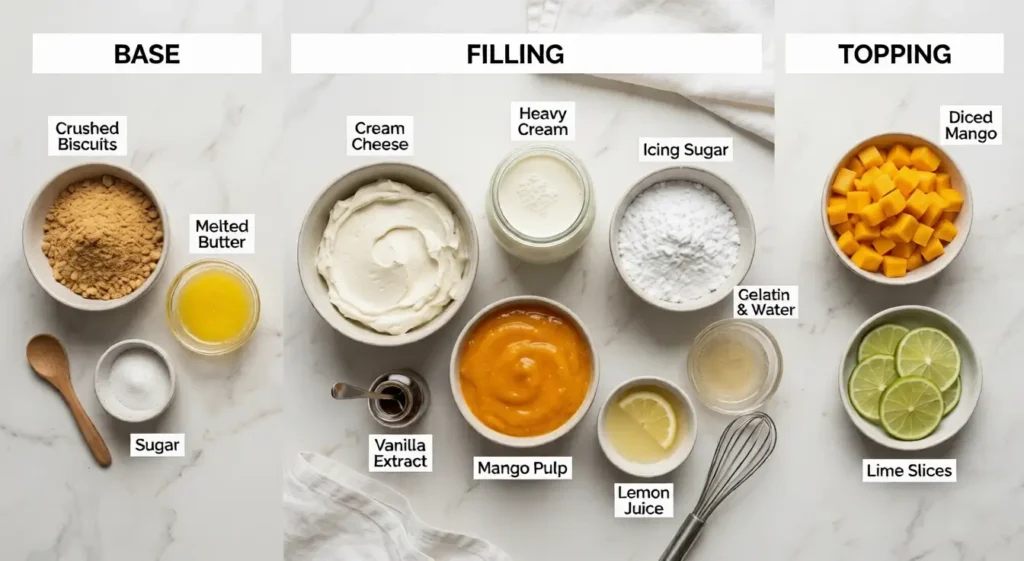
For the base:
- 200g digestive biscuits (or graham crackers)
- 90g unsalted butter, melted
- 1 tbsp sugar (I skip this most of the time)
For the filling:
- 500g full-fat cream cheese, at room temperature
- 300ml heavy whipping cream, cold
- 150g icing sugar, sifted
- 1 tsp vanilla extract
- 300g mango pulp (from 2–3 ripe mangoes, or one 850g can of Alphonso pulp)
- 2 tbsp fresh lemon or lime juice
- 2 tsp powdered gelatin + 3 tbsp cold water (skip this if you want, but I wouldn’t)
For the top:
- 150g fresh mango, diced or sliced thin
- A few lime slices if you want it to look like you tried
A note on the canned pulp: Alphonso mango pulp from an Indian grocery store gives you more flavor than blending fresh supermarket mangoes, especially outside of peak season. It’s consistent and genuinely good. Before you buy any can, flip it over and check the label. Some brands have sugar listed as the first or second ingredient, which means it’s more syrup than fruit. That’ll make the whole filling too sweet and hard to balance.
On biscuits: plain, not-too-sweet, anything crumbly works. Oreos are fine but scrape the cream filling out before crushing them, or the base ends up sticky and too sweet.
How to Make No-Bake Mango Cheesecake
Before you do anything else: take the cream cheese out of the fridge now. Set it on the counter. Cold cream cheese does not beat smooth — you’ll end up chasing lumps that never disappear. Give it at least an hour to come up to room temperature. That’s the most important prep step in this whole recipe.
The other thing to remember going in: cream cheese warm, whipping cream cold. Hold those two facts and everything else makes sense.
- The base. Blitz biscuits in a food processor to fine crumbs. No processor, put them in a bag and bash with a rolling pin. Mix crumbs with the melted butter until the texture looks like wet sand. Tip into a lined 20cm springform pan and press it down hard — use the flat base of a glass or a measuring cup, not your fingers. Pack the edges up about 1cm on the sides. Refrigerate for 30 minutes.
- Gelatin (if using). Sprinkle gelatin over 3 tablespoons of cold water in a small bowl. Leave it 5 minutes. Microwave 10–15 seconds until it dissolves. Put it aside to cool. It needs to be liquid but not warm when it goes in.
- The filling. Beat the room-temp cream cheese until there are no lumps. Add icing sugar and vanilla, beat again. Add the mango pulp and citrus juice and mix until smooth. Pour in the gelatin if you’re using it and stir to combine.
- Whipped cream. In a cold bowl (see tips below), whip the cold cream to stiff peaks. It should hold its shape when you lift the beaters. Stop there.
- Folding. Spoon the whipped cream into the mango mixture in three goes. Use a spatula, fold from the bottom, don’t stir. Stirring knocks out the air and you end up with a denser, flatter filling.
- Into the pan. Pour over the chilled base and smooth the top with the spatula. Tap the pan on the bench a few times to settle it.
- Chill. Six hours minimum. I know it sounds like a lot. It needs it. Overnight is better and honestly just easier because you stop thinking about it.
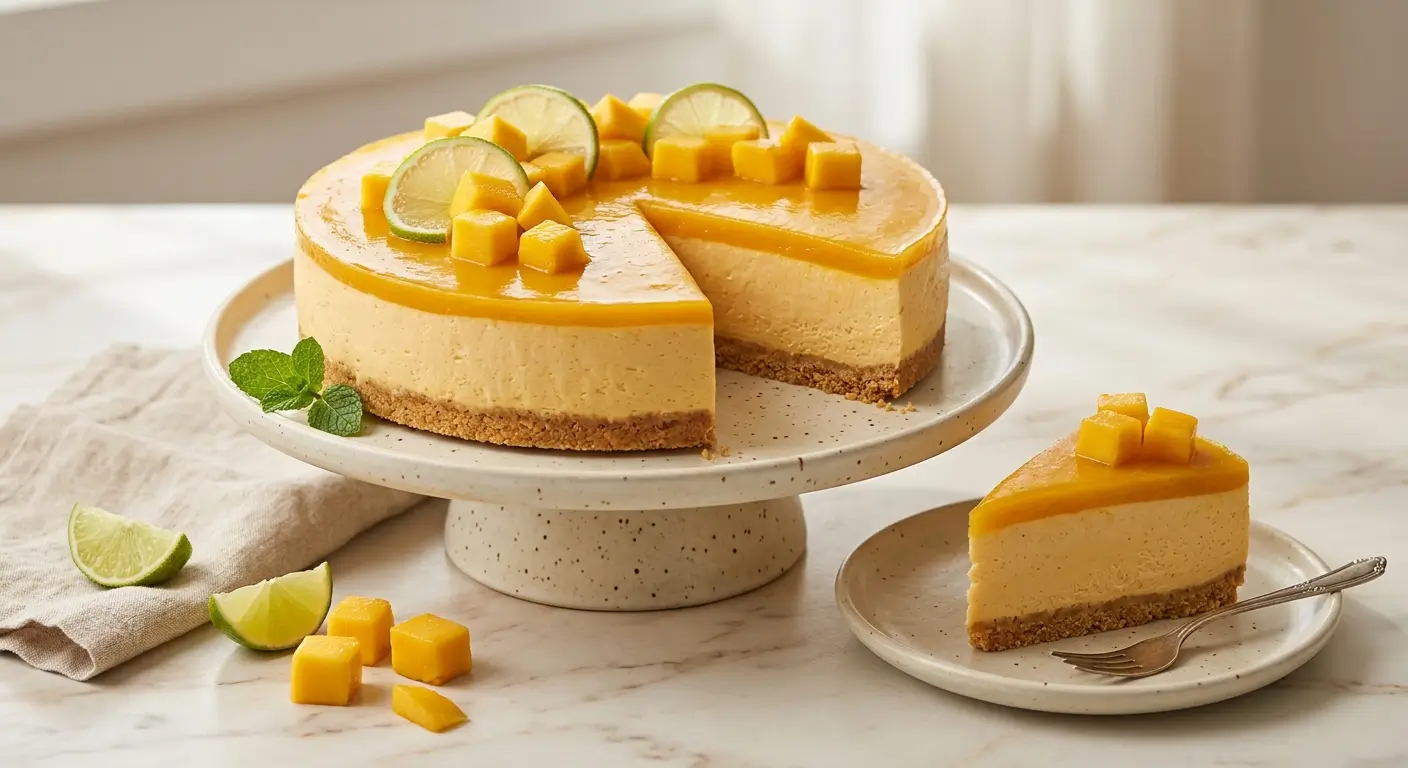
- Before serving. Arrange the fresh mango on top. Run a thin knife all the way around the inside edge of the pan, then unclip the springform slowly.
On timing: 25–30 minutes of hands-on work, then 6–8 hours of waiting. Fridge temperature makes a difference — a cold, well-stocked fridge sets it faster than a half-empty warm one.
Tips That Actually Make a Difference
Buy full-fat cream cheese and don’t substitute. The lower-fat versions carry more water. More water means the filling stays soft, weeps liquid around the edges, and won’t hold a clean slice. The fat is what gives the filling structure. Philadelphia is reliable. Most own-brand full-fat blocks are fine. Anything in a tub labeled “soft,” “light,” or “spreadable” — put it back.
Add the citrus juice. A lot of no-bake mango cheesecake recipes make it optional. It’s not. Acid sharpens the mango flavor and keeps the whole filling from tasting like flavored cream. Without it you get something sweet and vague. Two tablespoons of lemon or lime is the floor. If your mango pulp is very sweet, use three.
Cold bowl, cold beaters. Put your mixing bowl and the beaters in the freezer for five minutes before whipping the cream. Warm equipment warms the cream as you work, which slows everything down and gives you a less stable result. The freezer step takes no effort and speeds up the whipping.
Pack the base harder than feels necessary. Most people press it too lightly because it feels like enough. It isn’t. When you slice the cheesecake later, a loose base crumbles and the slice comes apart. Use something flat and heavy, press firmly, and get it up the sides of the pan. That small raised edge stops the filling from sliding off the base when you cut it.
Taste the mango pulp before mixing. Fresh mangoes in particular vary a lot in sweetness. If yours is already very sweet, drop the icing sugar to 120g. If it’s flat and underwhelming, add more citrus and a pinch of salt to bring it forward. The filling should taste slightly too sharp and intense before it goes in the fridge. After setting overnight, it mellows considerably.
“I made this for my mum’s birthday and she kept saying it tasted like something from a proper café. The mango flavor was actually real, which is more than I can say for most cheesecakes I’ve bought.” — Priya
Ways to Change It Up
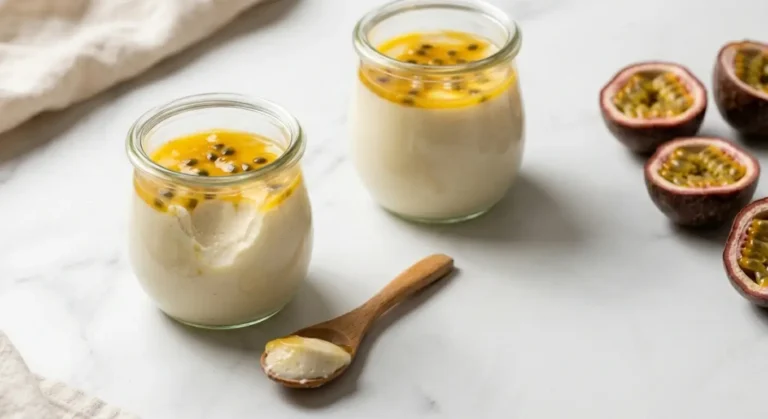
Mango and Passion Fruit Before you smooth the top of the filling, drop 3–4 tablespoons of passion fruit pulp across the surface and drag a skewer or knife through it a few times to create a swirl. Don’t mix it in fully. The tartness of the passion fruit sits nicely against the sweet mango. This one works particularly well after a heavier meal.
Mango Coconut Replace 100ml of the heavy cream with solid coconut cream — the kind you scoop from the top of a chilled can. It adds a faint coconut background without making it taste like sunscreen. Good after Thai food or alongside grilled pineapple.
Mango with Lime and Chili Mix 1 teaspoon of lime zest into the filling. Right before serving, scatter a small pinch of dried chili flakes over the top with a little extra zest. The heat is very subtle — you notice it a few seconds after each bite. Works well at the end of a spiced or curry-based dinner where you want something that cuts through richness.
Mango White Chocolate Melt 80g of white chocolate and let it cool completely before stirring into the cream cheese. The filling sets firmer and tastes richer. Serve in smaller slices. Strong coffee alongside is worth it.
Mango Ginger Grate 1 teaspoon of fresh ginger directly into the cream cheese mixture. It makes the dessert taste less tropical and more warming. Better suited to autumn or to meals where ginger was already in the food somewhere.
For the coconut version: shake each can before buying. If you hear liquid moving around, the cream has separated too much and won’t hold. You want a can that feels solid and heavy.
Storing and Using Leftovers
Wrap the pan in cling film or move slices to a sealed container. In the fridge it keeps well for 4 days. The base goes a little softer from day 2 onward, but the filling actually tastes better by day 3 once the mango has fully settled in.
To freeze: wrap individual slices snugly in cling film and put them in a freezer bag. Before bagging, freeze the slices flat on a tray for two hours first — otherwise they’ll fuse together and break when you try to peel them apart. They keep for up to 2 months.
To thaw, move slices to the fridge the evening before you want them. Thawing at room temperature makes the filling grainy and wet. Keep it cold throughout.
Three ways to use what’s left over:
Crumble a slice or two into glasses and layer with fresh mango and a bit of whipped cream. It looks like a parfait. Takes about 4 minutes. Genuinely better than it sounds.
Freeze individual slices and eat them straight from the freezer on a hot day. The filling firms up to something between mousse and ice cream. My kids prefer it this way.
Blend a slice with a cup of cold whole milk and a few ice cubes. Thick, cold, properly mango-flavored. Better than any bottled mango drink I’ve tried.
FAQ
Can I skip the gelatin? Yes. Without it the filling stays softer and won’t cut into clean neat slices. The taste is identical. If you’re serving it straight from the pan or in individual glasses, gelatin isn’t necessary. If you’re trying to slice it neatly at the table, use it.
Can I use frozen mango? You can. Defrost it completely and press out or drain as much liquid as you can first. Frozen mango holds a lot of water, and if that water gets into the filling the whole thing sets too soft.
What do most people get wrong? Not leaving it long enough in the fridge. Four or five hours feels like plenty. For most fridges it isn’t. The filling is still too loose to slice cleanly and it slides. Leave it overnight and the problem goes away.
Do I need a springform pan? It’s much harder without one. If you don’t have a springform, pour the filling into individual glasses or ramekins and serve them that way. No unmolding, no issue.
Can I make this without dairy? You can get close. Violife dairy-free cream cheese works better than most alternatives — it holds structure reasonably well. Use coconut cream in place of heavy cream. The texture comes out softer and the flavor tilts toward coconut rather than cream. It’s good, but it’s a different dessert.
Final Note
No-bake mango cheesecake is not a complicated recipe. You mix things, you press things, you wait. If you use ripe mango, full-fat cream cheese, and give it a full night in the fridge, it’s going to be good. Make it the evening before you need it, keep it cold, and you’re done.