
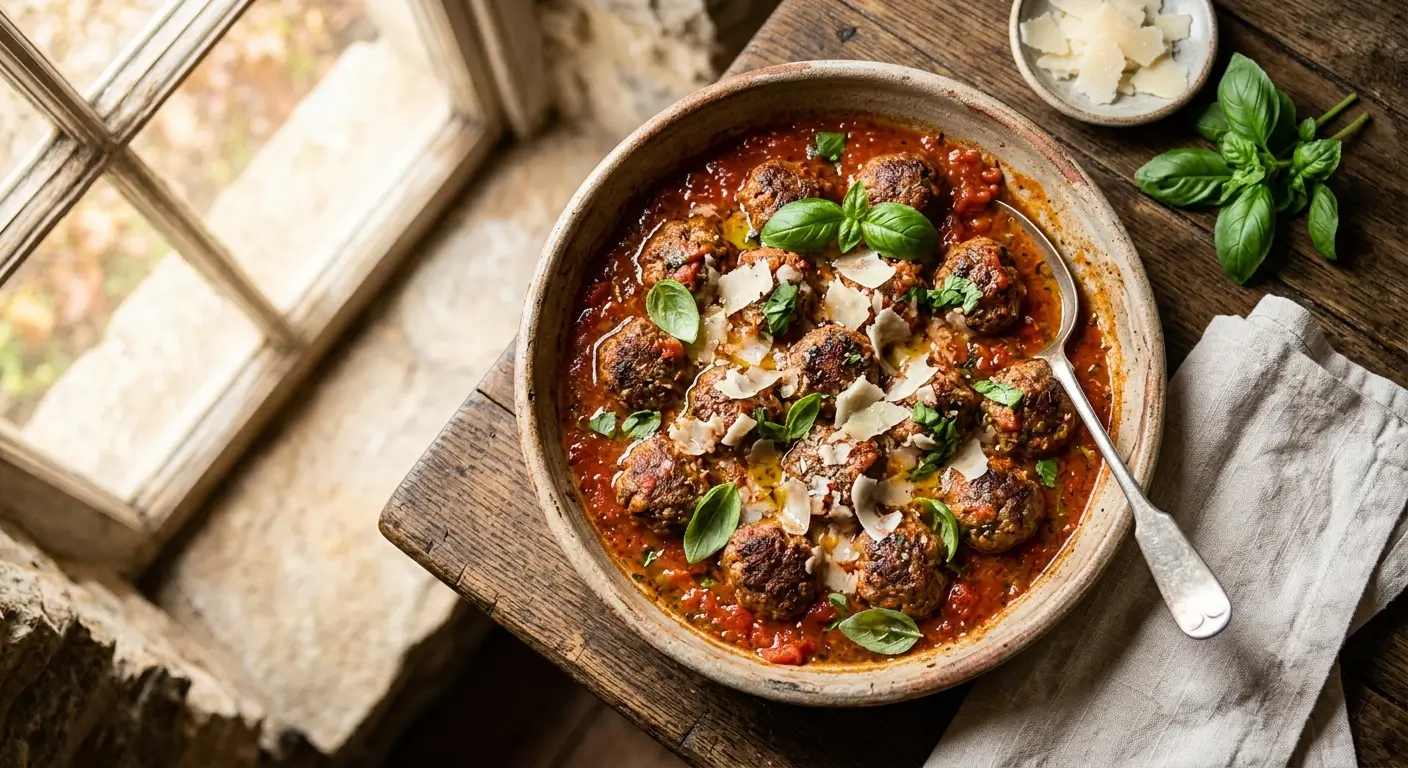
Classic Meatballs Recipe (Juicy, Tender & Easy)
I’ve made meatballs more times than I can count, and this is the recipe I keep coming back to. It’s the one my kids ask for on a Tuesday and the one I serve when family comes over on a Sunday. No fancy techniques, no obscure ingredients. Just a mix of beef, a few pantry staples, and a method that gives you tender, juicy meatballs every single time.
What makes this version different is the ratio. A lot of recipes go heavy on breadcrumbs and light on seasoning, and you end up with a dense, bland ball of meat. This recipe fixes that. You’ll get a meatball that holds together in the pan or the oven but still feels soft when you bite into it.
You can serve these in tomato sauce over spaghetti, tuck them into a sub roll, or eat them straight off a toothpick at a party. This recipe covers all three, plus every variation you might need for allergies, diet preferences, or just a Tuesday when you want something different.
Why You’ll Love This meatballs
- Ready in under an hour, including prep time
- Uses ingredients you likely already have in your kitchen
- Works baked or pan fried, your choice
- Freezes well, so you can double the batch and stock your freezer
- Kid-friendly flavor that adults love too
- No stand mixer or special equipment required
- Easy to adapt for gluten-free, dairy-free, or spicy versions
- Consistent results even if you’ve never made meatballs before
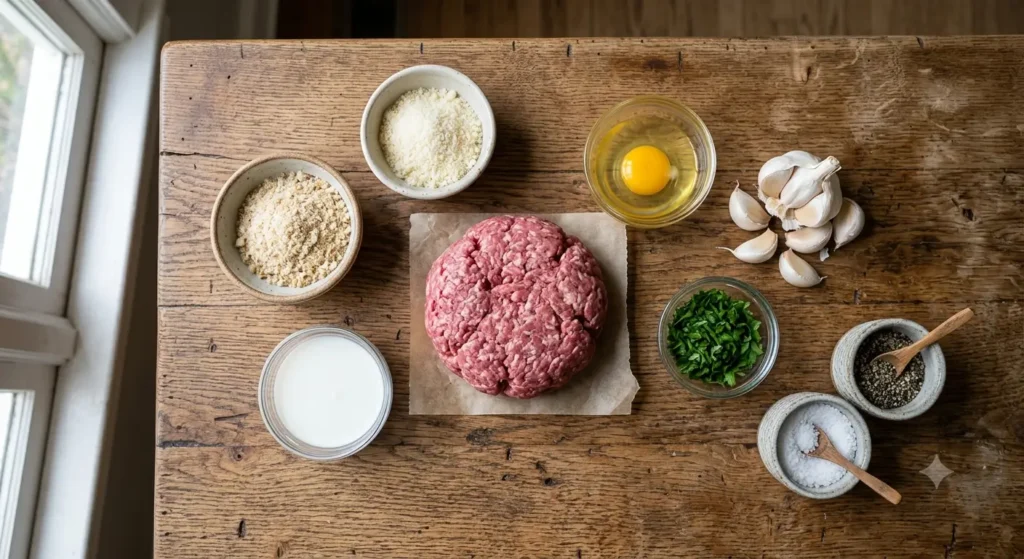
Ingredients
For the meatballs:
- 1 pound (450g) ground beef, 80/20 blend. The fat keeps the meatballs juicy. Ground turkey or pork work as substitutes, though pork will give a richer flavor.
- 1/2 cup (50g) breadcrumbs, plain or Italian seasoned. Panko works too, but plain breadcrumbs absorb liquid better and give a softer texture. For gluten-free, use gluten-free breadcrumbs or crushed gluten-free crackers.
- 1/4 cup (25g) grated Parmesan cheese. Adds salt and a savory edge. Pecorino Romano is a sharper substitute.
- 1/4 cup (60ml) whole milk. This softens the breadcrumbs and keeps the mixture moist. Use a dairy-free milk like unsweetened oat milk if needed.
- 1 large egg. Acts as the binder that holds everything together.
- 2 garlic cloves, minced. Fresh garlic beats the jarred kind here for flavor.
- 2 tablespoons fresh parsley, chopped. Dried parsley works in a pinch at one-third the amount.
- 1/2 teaspoon salt
- 1/4 teaspoon black pepper
- 1/2 teaspoon dried oregano
- 1/4 teaspoon crushed red pepper flakes (optional, for a little heat)
For cooking and serving:
- 2 tablespoons olive oil (if pan frying)
- 3 to 4 cups (700 to 950ml) marinara or tomato sauce, store-bought or homemade
- Fresh basil, for garnish
Shopping tip: buy ground beef with visible fat marbling rather than the leanest option on the shelf. Lean beef dries out faster in meatballs, and you’ll lose the texture you’re after.
Equipment Needed
- Large mixing bowl
- Measuring cups and spoons
- Baking sheet lined with parchment paper (for the baked method)
- Large oven-safe skillet or Dutch oven (for the pan-fried method)
- Meat thermometer
- Cookie scoop or two spoons for shaping
- Wire cooling rack (optional, but helps drain excess fat if baking)
Ingredient Notes
The milk and breadcrumb combination is called a panade, and it’s the single biggest factor in whether your meatballs turn out tender or tough. Skipping it or using too little liquid is the most common reason meatballs come out dense.
Parmesan does double duty here. It adds saltiness so you don’t need as much added salt, and it brings a savory depth that plain breadcrumbs can’t match on their own.
If you’re using a leaner meat like ground turkey, add an extra tablespoon of olive oil to the mixture to make up for the missing fat. Otherwise you’ll end up with meatballs that are dry no matter how carefully you cook them.
Step-by-Step Instructions
1. Soak the breadcrumbs (5 minutes) Combine the breadcrumbs and milk in a small bowl and let them sit for 5 minutes until the crumbs absorb the liquid and turn into a paste. This step matters more than it looks like it should. Skipping it means dry, crumbly meatballs. You’ll know it’s ready when the mixture looks like wet sand and holds together when you press it with a spoon.
2. Mix the meatball mixture (5 minutes) In a large bowl, combine the ground beef, soaked breadcrumbs, Parmesan, egg, garlic, parsley, salt, pepper, oregano, and red pepper flakes if using. Mix with your hands until just combined. Common mistake: overmixing. The more you work the meat, the tighter the protein strands get, and that leads to tough, rubbery meatballs. Stop as soon as everything is evenly distributed.
3. Shape the meatballs (10 minutes) Using a cookie scoop or two spoons, portion the mixture into balls about 1.5 inches wide, roughly the size of a golf ball. Roll each one gently between your palms. Don’t pack them tightly. A light touch here keeps them tender. This batch makes about 20 meatballs. Wet your hands slightly if the mixture sticks.
4. Choose your cooking method
Baking (25 to 30 minutes): Preheat your oven to 400°F (200°C). Arrange the meatballs on a parchment-lined baking sheet, leaving space between each one so they brown instead of steam. Bake for 25 to 30 minutes, until the internal temperature reaches 165°F (74°C) on a meat thermometer. You’re looking for a golden-brown exterior with slightly darker edges.
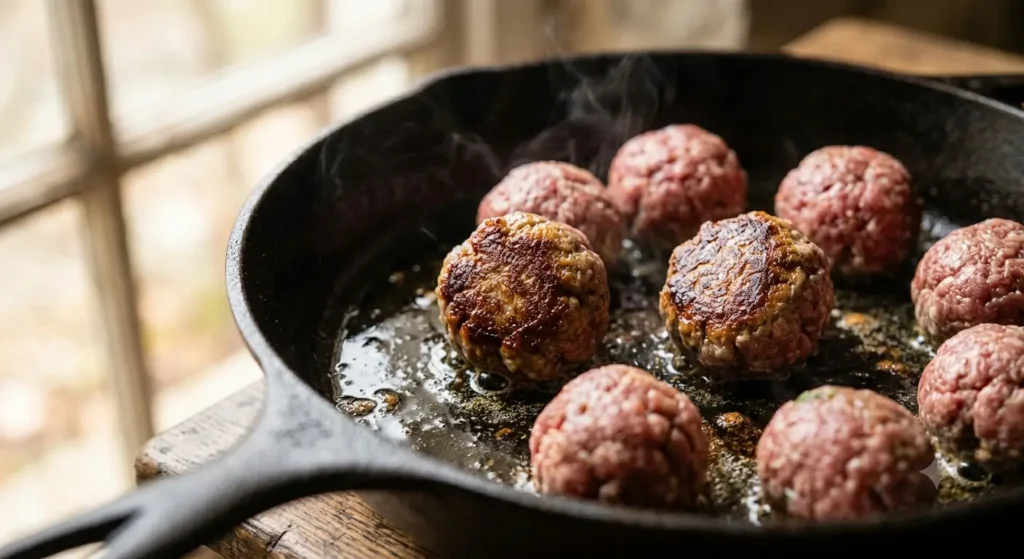
Pan frying (12 to 15 minutes): Heat olive oil in a large skillet over medium heat. Add the meatballs in a single layer, without crowding the pan. Cook for 3 to 4 minutes per side, turning gently, until browned on all sides and cooked through. Crowding the pan is the most common mistake here. It drops the pan temperature and causes the meatballs to steam instead of sear, so you lose that crust.
5. Finish in sauce (10 minutes) Warm the marinara sauce in a large pot or the same skillet over medium-low heat. Add the cooked meatballs and simmer for 10 minutes, spooning sauce over them occasionally. This step lets the meatballs soak up flavor and finishes cooking any that are slightly underdone. Simmer gently. Boiling the sauce can toughen the meatballs.
6. Serve Garnish with fresh basil and extra Parmesan. Serve over pasta, in a sandwich roll, or on their own with toothpicks for a party.
Expert Tips
- Keep your hands wet or lightly oiled when shaping meatballs so the mixture doesn’t stick to your palms.
- Test one meatball’s seasoning before cooking the whole batch. Fry a small patty of the mixture in a pan and taste it, then adjust the salt or spices in the rest.
- Don’t skip the resting step after cooking. Let the meatballs sit for 5 minutes before serving so the juices redistribute.
- Use a cookie scoop for consistent sizing. Uniform meatballs cook at the same rate, so you won’t end up with some overdone and others underdone.
- If your mixture feels too wet to shape, add breadcrumbs one tablespoon at a time until it firms up.
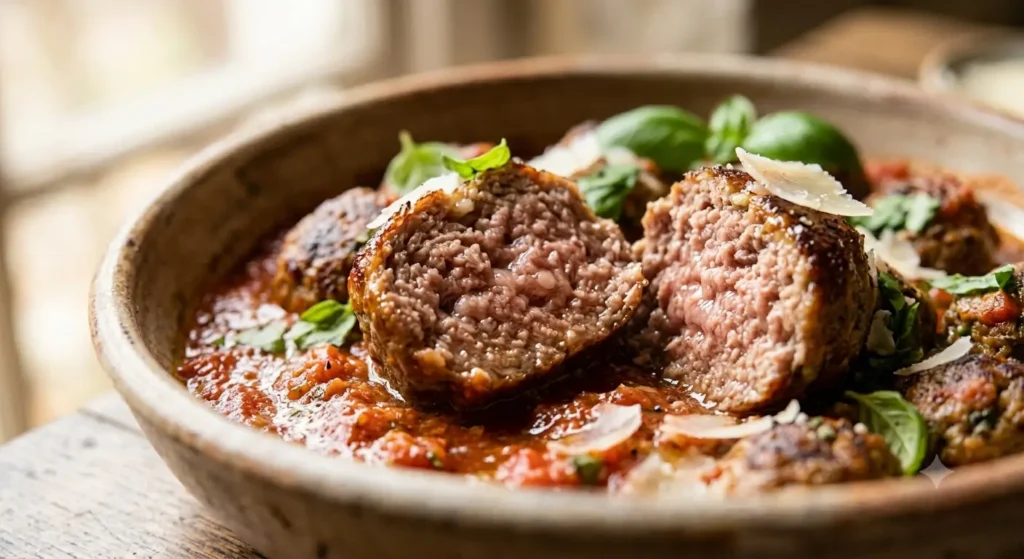
- A meat thermometer is the only reliable way to check doneness. Cutting one open lets juices escape and dries out the rest.
- Chill the shaped meatballs in the fridge for 15 minutes before cooking if they feel too soft to hold their shape.
- Brown meatballs in batches rather than crowding the pan. It’s worth the extra few minutes.
- Make a double batch and freeze half raw on a tray before transferring to a freezer bag. You’ll have meatballs ready to cook straight from frozen.
- Add a splash of the pasta cooking water to your sauce before simmering the meatballs. The starch helps the sauce cling better.
- Use your hands, not a spoon, to combine the meat mixture. You’ll get a more even blend with less overworking.
- If you want extra flavor depth, brown the meatballs first, then finish cooking them in the sauce rather than baking them fully before adding sauce.
Recipe Variations
Healthier version: Swap ground beef for a lean ground turkey or chicken blend, and bake instead of pan frying to cut down on added fat.
Gluten-free: Use gluten-free breadcrumbs or almond flour in place of regular breadcrumbs. The texture stays nearly identical.
Dairy-free: Replace the milk with unsweetened oat or almond milk, and skip the Parmesan or use a dairy-free alternative.
Vegan version: Replace the beef with a plant-based ground meat substitute, use a flax egg (1 tablespoon ground flaxseed mixed with 3 tablespoons water) in place of the egg, and use nutritional yeast instead of Parmesan for a similar savory note.
Spicy version: Double the red pepper flakes and add a diced fresh jalapeño to the mixture. A dash of hot sauce in the sauce itself adds another layer of heat.
Kid-friendly version: Cut the garlic in half and skip the red pepper flakes entirely. Shape the meatballs smaller so they’re easier for little hands to eat.
Holiday version: Add a tablespoon of grated onion and a pinch of nutmeg to the mixture for a slightly sweeter, more festive flavor, and serve with a cranberry-spiked tomato sauce for a holiday appetizer platter.
What to Serve With meatballs
Sides: garlic bread, a simple green salad, roasted vegetables, or creamy polenta.
Sauces: classic marinara, a rich Bolognese, or a lighter garlic and olive oil sauce for a change of pace.
Drinks: a medium-bodied red wine like Chianti pairs well, or sparkling water with lemon for a non-alcoholic option.
Desserts: tiramisu or a simple lemon sorbet to cut through the richness of the meal.
Garnishes: fresh basil, extra grated Parmesan, or a drizzle of good olive oil right before serving.
Looking for other dinner ideas with bold flavor, try this honey garlic shrimp tacos with mango slaw or, for something a bit different, this lamb kofta with tzatziki and flatbread.
Storage Instructions
Refrigerator: Store cooked meatballs in an airtight container for up to 4 days. Keep them in the sauce if possible, since this helps them stay moist.
Freezer: Freeze cooked meatballs (with or without sauce) in a freezer-safe container for up to 3 months. For raw meatballs, freeze them on a tray first until solid, then transfer to a freezer bag so they don’t stick together.
Reheating: Warm meatballs in a covered skillet over low heat with a splash of sauce or water, stirring occasionally, for about 10 minutes. You can also reheat in the microwave in 30-second bursts, though the texture holds up better on the stove.
Meal prep: Shape and freeze raw meatballs ahead of time, then cook them straight from frozen, adding a few extra minutes to the cook time.
Shelf life: 4 days refrigerated, 3 months frozen.
Troubleshooting
My meatballs fell apart while cooking. This usually means the mixture didn’t have enough binder. Add another egg or a bit more breadcrumb mixture next time, and avoid flipping them too early in the pan.
My meatballs are tough and dense. You likely overmixed the meat or skipped the milk-soaked breadcrumb step. Mix just until combined, and always use the panade.
My meatballs are dry. Lean meat or overcooking are the usual causes. Use 80/20 ground beef, and pull them from heat as soon as they hit 165°F (74°C).
My meatballs are bland. Taste the raw mixture (or a small cooked test patty) before shaping the whole batch, and don’t be shy with the salt and Parmesan.
My meatballs are browning unevenly. The pan is probably too crowded or the heat is uneven. Cook in batches and make sure your pan is fully preheated before adding the meatballs.
Nutrition Information
Estimated values per serving (based on 4 meatballs with sauce, makes 5 servings):
| Nutrient | Amount |
|---|---|
| Calories | 320 |
| Protein | 22g |
| Fat | 20g |
| Carbohydrates | 12g |
| Fiber | 2g |
| Sugar | 5g |
| Sodium | 640mg |
These values are estimates only and will vary depending on the specific brands and ingredients used. For precise nutritional information, calculate based on your exact ingredients.
Frequently Asked Questions
Can I make meatballs without breadcrumbs? Yes. Crushed crackers, rolled oats, or almond flour all work as substitutes, though the texture will vary slightly.
Why do my meatballs fall apart in sauce? This usually happens when the meatballs haven’t fully set before going into the sauce, or when the sauce is boiling too hard. Brown them first and simmer gently.
Can I use ground turkey instead of beef? Yes, though turkey is leaner, so add an extra tablespoon of olive oil to the mixture to prevent dryness.
Do I need to brown meatballs before adding them to sauce? It’s not required, but browning first adds flavor through caramelization and helps the meatballs hold their shape.
How do I know when meatballs are fully cooked? Use a meat thermometer. They’re done at 165°F (74°C) internal temperature.
Can I make these ahead of time? Yes. Shape them up to a day ahead and refrigerate, or freeze raw or cooked meatballs for longer storage.
What’s the best meat ratio for juicy meatballs? An 80/20 blend of lean meat to fat gives the best balance of flavor and moisture.
Can I bake meatballs instead of frying them? Yes, baking at 400°F (200°C) for 25 to 30 minutes gives a similar result with less hands-on cooking.
How many meatballs does this recipe make? About 20 meatballs, roughly 5 servings of 4 meatballs each.
Can I double this recipe? Yes, this recipe scales well. Just cook in batches to avoid crowding the pan or oven sheet.
What can I use instead of egg as a binder? A flax egg (1 tablespoon ground flaxseed with 3 tablespoons water, rested for 5 minutes) works as a substitute.
Why did my meatballs turn out rubbery? Overmixing the meat mixture is the most common cause. Mix only until the ingredients are combined.
Can I cook meatballs in an air fryer? Yes. Cook at 375°F (190°C) for about 12 to 15 minutes, shaking the basket halfway through, until they reach 165°F (74°C) internally.
Should I use fresh or dried herbs? Fresh parsley and garlic give the brightest flavor, but dried versions work in a pinch at about one-third the amount.
Can kids eat this recipe? Yes, this recipe is naturally kid-friendly. Reduce the garlic and skip the red pepper flakes for a milder version.
Conclusion
This recipe works because it sticks to the basics that actually matter: a good meat-to-fat ratio, a proper panade, and not overworking the mixture. Once you’ve made it a couple of times, you’ll have the ratios memorized and won’t even need to measure.
Give it a try this week, and let me know how it turns out in the comments below. If you make any changes or swaps, I’d love to hear what worked for you.